Drone Technology in Farming: Boosting Yields, Cutting Costs & Saving Time
For centuries, farmers relied on manual labor, guesswork, and time-consuming practices to manage their fields. From sowing seeds to applying fertilizers and pesticides, traditional methods often led to inefficiencies, higher costs, and unpredictable results. But today, with rapid advancements in unmanned aerial vehicles (UAVs), farmers can access detailed insights, automate critical tasks, and significantly improve both productivity and profitability.
Farmers are no longer bound by the limitations of manual work; they now have access to aerial intelligence that saves time, reduces costs, and boosts yields.Garuda Aerospace is at the forefront of this revolution, providing farmer-friendly drones such as the Kisan Agri Drone and Droni Drone that deliver both precision and performance.
This comprehensive guide explores how drone technology is transforming agriculture, the wide range of applications it offers, and why it has become an indispensable tool for the farmers of today and tomorrow.
Understanding the Role of Drone Technology in Farming
The essence of drone use in farming lies in precision. Unlike traditional methods, drones allow farmers to analyze crops, soil, and water resources with accuracy that was once unimaginable. Equipped with high-resolution cameras, sensors, and AI-powered analytics, drones enable farmers to make data-driven decisions that enhance every stage of the crop cycle from planting to harvesting.
Where manual monitoring was slow and often reactive, drone technology is proactive. Farmers can detect early signs of pest infestations, nutrient deficiencies, or irrigation problems, and address them before they escalate into serious losses. By bringing aerial intelligence into everyday farming, drones act as a farmer’s eye in the sky, combining efficiency with sustainability.
Crop Health Monitoring with Drones
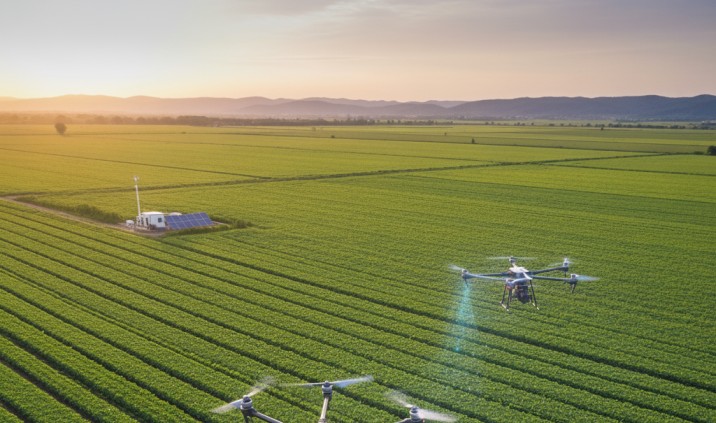
Healthy crops are the foundation of profitable farming, but monitoring large fields manually is both labor-intensive and limited in accuracy. Drones solve this challenge by offering real-time crop health monitoring & assessment through multispectral, and imaging.
Drones scan fields to capture data on plant color, canopy temperature, and reflectance. These metrics indicate early signs of stress, whether caused by pests, water shortages, or nutrient deficiencies.
Early detection ensures that interventions like pesticide application or irrigation are timely and targeted, preventing yield losses.
Precision Agriculture and Resource Optimization
One of the greatest revolutions brought by drone technology in farming is its role in promoting precision agriculture. Precision farming is all about doing the right thing, at the right place, and in the right way. Unlike traditional farming, where inputs such as fertilizers, pesticides, and water are applied uniformly across large areas, drones allow farmers to identify exactly where intervention is needed and apply resources accordingly. This leads to a remarkable balance between higher crop yields, lower costs, and sustainable practices.
For instance, fertilizer application has always been one of the most resource-heavy and expensive parts of farming. With drones, instead of applying nutrients across an entire field, advanced sensors and multispectral cameras identify areas where soil health is poor or crops show signs of nutrient deficiency. Farmers can then apply fertilizers only where necessary. This not only reduces costs but also minimizes the chances of over-fertilization, which can damage soil health and contaminate nearby water bodies. In some cases, drones can save up to 25–30% of fertilizer use, translating to significant financial savings for farmers, especially those managing large farms.
The environmental benefits of this approach are just as important. Reduced chemical usage means less soil degradation over time and fewer harmful chemicals running off into rivers and groundwater systems. For example, if only 25% of a wheat field requires additional nitrogen, drones make it possible to deliver nutrients specifically to those zones. This protects both the crop and the ecosystem, ensuring a more sustainable agricultural future.
Smart Irrigation and Soil Management
Water scarcity is one of the most pressing challenges faced by farmers worldwide, and in a country like India, this challenge is particularly acute. States such as Maharashtra, Karnataka, and Rajasthan often face severe droughts, leading to crop failures and financial stress for farming communities. Drone technology in farming offers a powerful solution to this crisis by enabling farmers to monitor soil conditions and manage irrigation more intelligently.
Drones equipped with sensors and imaging tools can conduct mapping across fields, identifying uneven water distribution and detecting zones prone to waterlogging or drought stress. This real-time data is invaluable for farmers who rely on precision to manage limited water resources. By analyzing these aerial insights, farmers can adjust irrigation schedules, fine-tune drip systems, and reduce overall water consumption without compromising crop health.
Their soil inspection and monitoring drones are being used in drought-prone regions, ensuring that every drop of water is used wisely. By reducing water wastage, farmers not only save money but also ensure the long-term sustainability of their land, which is essential for future generations.
Pest and Disease Detection
Pest infestations and plant diseases are responsible for billions of dollars in crop losses every year across the globe. Traditional pest scouting methods, where farmers physically inspect crops, often detect problems only after significant visible damage has occurred. By then, the infestation has usually spread, requiring large-scale pesticide spraying and leading to financial loss as well as environmental damage.
This is where drones make a tremendous difference. Drones equipped with high-resolution cameras and advanced imaging systems can detect early signs of stress in crops caused by pests or diseases—long before the human eye can. Multispectral and thermal imaging allow for the detection of subtle changes in crop health, such as discoloration, canopy stress, or irregular growth patterns.
The benefits are immense. Farmers can quickly identify pest hotspots and target their treatment to only those areas instead of spraying pesticides across the entire field. This not only saves money on chemicals but also reduces exposure to harmful substances for both farmers and consumers. Moreover, targeted spraying lowers the risk of pests developing resistance to pesticides, a growing concern in modern agriculture.
Field Mapping, Land Surveying
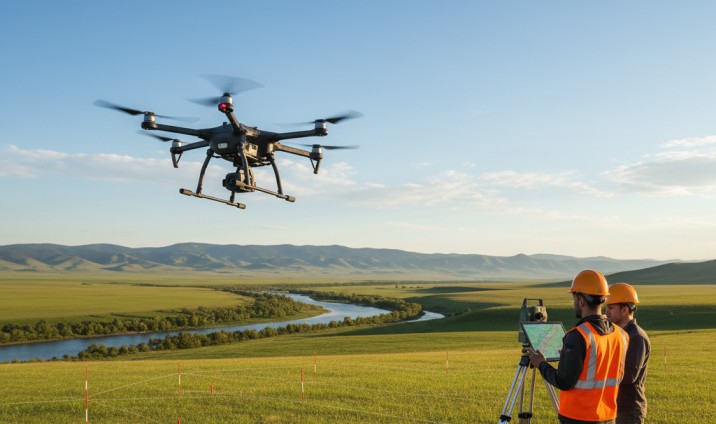
Large-scale farming and agri-businesses require accurate field data to plan operations effectively. Drones offer data and mapping that once required weeks of manual surveys.
Applications: Planning crop rotation, irrigation layouts, or land suitability analysis.
Time Savings: What took weeks can now be accomplished in hours with drones.
Precision Spraying: The Kisan Agri Drone sprays fertilizers, pesticides, or micronutrients evenly, covering up to 6 acres in just an hour.
Garuda Aerospace specializes in field mapping solutions, providing farmers with detailed maps that enable smarter decision-making for long-term sustainability.
Labor shortages during peak farming seasons often slow down critical tasks like planting and spraying. Drones automate these functions, saving both time and effort.
This reduces chemical use by up to 30% and cuts farmers’ dependency on manual labor. For many small and mid-sized farmers, drone spraying has proven a game-changer, ensuring timely farm operations even during labor shortages.
Livestock Monitoring and Management
The use of drones in farming extends far beyond crops. Livestock management also benefits significantly from drone-assisted monitoring. Equipped with advanced cameras and sensors, drones make it easier to oversee animal health, grazing patterns, and safety across large tracts of land.
Applications in Livestock Management:
Health Monitoring: Thermal cameras can detect abnormal body temperatures, allowing early detection of illness.
Grazing Management: Tracking herd movement helps prevent overgrazing in one particular area.
Animal Tracking: Stray or missing cattle can be quickly located in vast grazing lands.
Safety and Security: Drones provide night-time monitoring to protect against theft or predator attacks.
Environmental and Ecosystem Monitoring
Drones can fly over large landscapes and gather detailed data that would otherwise take weeks of human labor to collect. Equipped with multispectral, and cameras, these aerial devices provide insights into soil erosion, forest cover, biodiversity, and overall ecosystem health. Such data helps governments, NGOs, and farmers make better decisions about resource allocation and conservation strategies.
Biodiversity and Wildlife Tracking: Drones help monitor animal populations, migration routes, and habitat conditions without disturbing wildlife. This allows for safer and more accurate tracking than traditional ground surveys.
Reforestation Efforts: With the ability to plant thousands of seed pods per day, drones play a crucial role in restoring degraded lands. They can access steep terrains and remote areas that humans cannot easily reach, accelerating large-scale reforestation projects.
Soil and Water Conservation: Drones provide real-time images of soil erosion patterns and water run-off zones, enabling farmers and policymakers to implement preventive measures such as contour farming or rainwater harvesting.
Pollution Monitoring: In regions affected by industrial farming or urban sprawl, drones can assess air and water quality, ensuring early detection of pollutants that may harm crops and local communities.
Ecosystem Protection: By continuously monitoring environmental indicators like vegetation health, tree cover, and soil condition, drones empower farmers to balance high productivity with the preservation of local ecosystems. This means agriculture can progress without exhausting the natural resources that sustain it.
Conclusion
As AI and machine learning become more advanced, drones will provide even deeper insights, enabling predictive farming. Combined with IoT sensors and data analytics, they will transform farms into smart farms, capable of self-regulating inputs and maximizing efficiency.
For countries like India, where agriculture is the backbone of the economy, this shift represents more than just modernization—it’s a pathway to food security, economic growth, and sustainability.
From monitoring crop health and optimizing irrigation to automating spraying and tracking livestock, drones empower farmers to boost yields, cut costs, and save time. With strong government support, increasing affordability, and innovators like Garuda Aerospace leading the charge, drones are set to become as common on farms as tractors once were.
For farmers, adopting drone technology is not about keeping up with change—it’s about embracing a smarter, more profitable, and sustainable future.