Garuda Aerospace | Blogs
Drone Technology
Kisan Drone
Garuda Drones
Crop sprayer drone is rapidly reshaping the agricultural landscape, moving farmers away from traditional, labor-intensive spraying methods to highly efficient, automated precision farming practices. What was once a manual process that required significant time, physical effort, and resources has now evolved into a smarter, faster, and more sustainable system. In countries like India, where agriculture remains the backbone of the economy and employs nearly 60% of the population, the adoption of crop sprayer drones is more than just a trend—it is a necessity.
Farmers today face mounting challenges such as rising input costs, unpredictable weather, pest infestations, water scarcity, and shrinking labor availability. Against this backdrop, sprayer drones offer a powerful solution that not only addresses these issues but also empowers farmers with data-driven insights and modern tools.
Why the Shift from Manual Spraying to Crop Sprayer Drones?
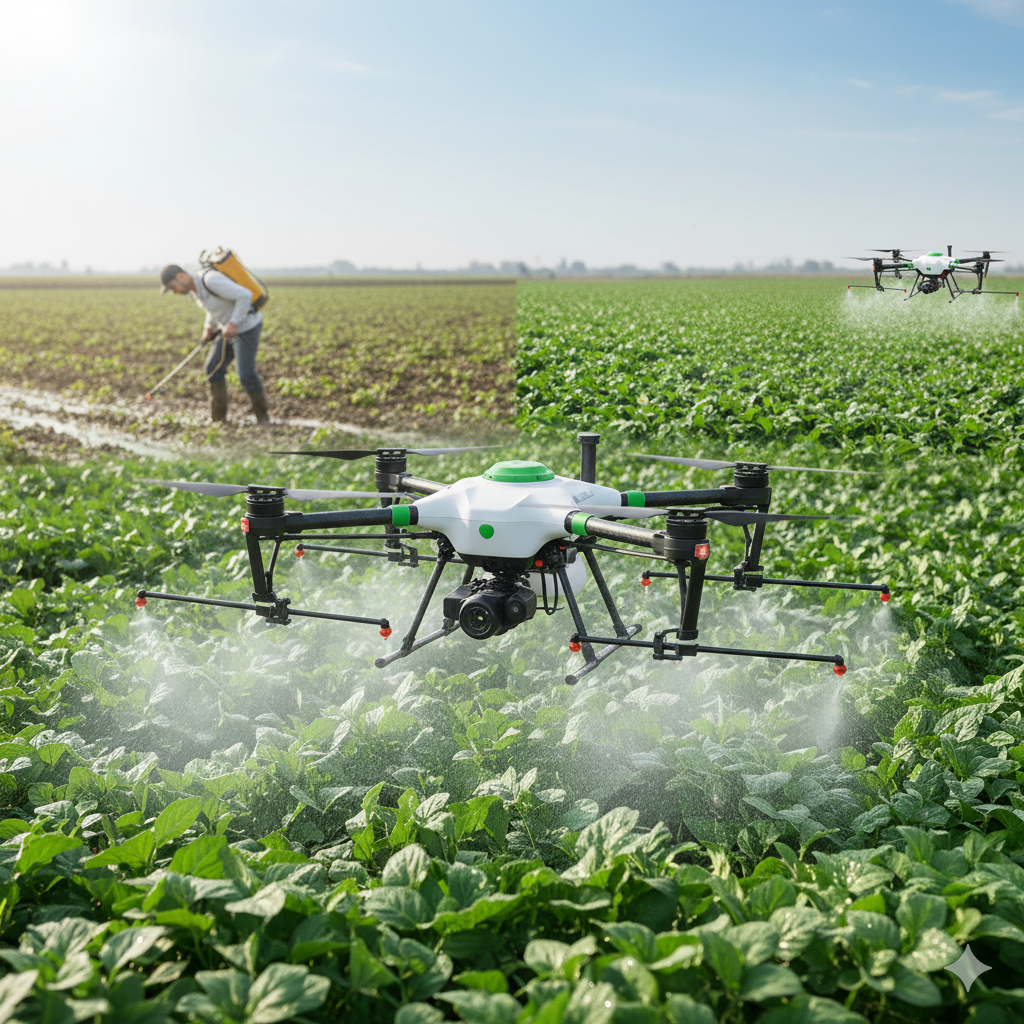
Manual spraying in agriculture has long been a labor-intensive and risky process. Farmers often have to carry heavy pesticide tanks on their backs or mount them on tractors to cover large areas of farmland. This traditional method not only consumes a significant amount of time but also exposes farmers directly to harmful chemicals, which can lead to serious health risks such as skin irritation, respiratory problems, and long-term illnesses. Additionally, manual spraying usually results in inconsistent coverage, where some sections of the field may receive excess chemicals while others are left untreated. This uneven distribution not only wastes valuable resources like pesticides and water but also affects overall crop health and productivity.
In contrast, the adoption of crop sprayer drones is transforming the way spraying is carried out. These advanced machines bring precision, safety, and efficiency to farming operations. Equipped with GPS technology, intelligent sensors, and pre-programmed automated flight paths, drones ensure that every part of the field receives the right amount of pesticide or fertilizer. This level of accuracy minimizes wastage, reduces costs, and enhances crop quality. Moreover, crop sprayer drones drastically reduce the time required for spraying—what once took hours of strenuous manual work can now be completed in just minutes. By minimizing human involvement in direct spraying, drones also eliminate exposure to toxic chemicals, ensuring better safety for farmers. Ultimately, crop sprayer drones are not just tools of convenience; they are paving the way for smarter, healthier, and more sustainable farming practices.
Key Benefits of Crop Sprayer Drones
1. Efficiency and Speed
Crop sprayer drones can cover large areas in a fraction of the time compared to manual spraying. For instance, a drone with a 10L spray tank can cover up a large area per hour, and with multiple battery sets, farmers can manage acres per day. This efficiency ensures timely spraying during critical crop stages.
2. Farmer Safety
One of the biggest advantages of crop sprayer drones is reducing farmers’ direct exposure to harmful pesticides and fertilizers. By automating spraying tasks, drones minimize health hazards associated with chemical inhalation and skin contact.
3. Resource Optimization
Drones reduce pesticide and water consumption significantly. Reports show that drone spraying can lower pesticide use by 40–80% and reduce water requirements to about 10 liters per acre compared to the hundreds of liters needed with traditional methods.
5. Adaptability Across Crops
Whether it’s paddy fields, sugarcane, cotton, or fruits and vegetables, crop sprayer drones can adapt to different terrains and crops. Their ability to fly at low altitudes and navigate uneven fields makes them especially useful for diverse Indian farmlands.
Smart Skies over Indian Farms: The Rise of Agricultural Drone Adoption
India is rapidly positioning itself as one of the world’s fastest-growing hubs for agricultural drone technology, driven by a combination of government support, industry innovation, and the urgent need for smarter farming practices. What was once seen as a futuristic concept has now become an accessible reality for farmers across the country. The Indian government has played a pivotal role in this transformation by introducing favorable policies and subsidy programs that encourage farmers to adopt drone technology on a larger scale.
One of the most impactful initiatives is the Sub-Mission on Agricultural Mechanization (SMAM) scheme, under which farmers can avail subsidies covering up to 40-50% of the cost of agricultural drones. This makes the technology affordable not only for large-scale agribusinesses but also for small and medium farmers, who form the backbone of India’s agricultural sector. By bridging the affordability gap, these subsidies are democratizing access to advanced precision farming tools, enabling a wider spectrum of farmers to benefit from the efficiency and sustainability that drones bring.
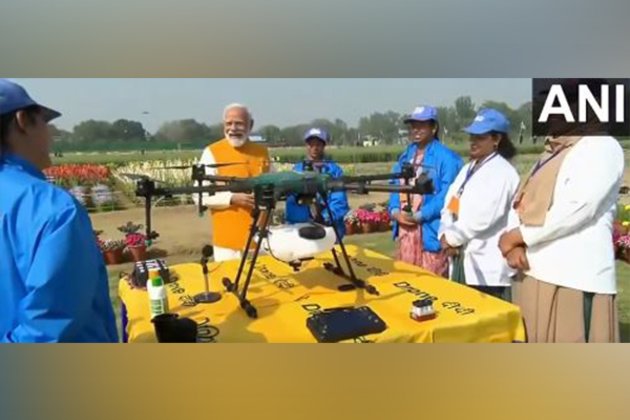
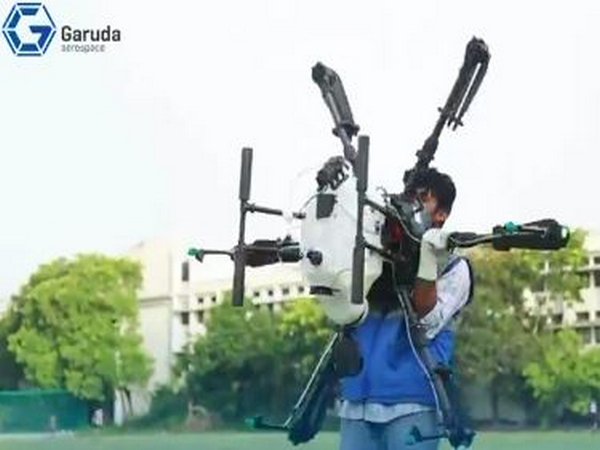
Alongside government support, homegrown drone manufacturers are fueling this momentum. Companies like Garuda Aerospace have become frontrunners in designing drones tailored for India’s unique agricultural landscape, which includes diverse crops, challenging terrains, and varying climatic conditions. Their flagship model, the Kisan Agri Drone V.2, is a DGCA-approved agricultural UAV (Unmanned Aerial Vehicle) created specifically with farmers in mind.
What makes these drones particularly effective is the integration of advanced safety and operational features. For example, terrain detection and obstacle avoidance systems allow drones to fly safely even in uneven fields or densely planted areas. These innovations make drones not only reliable but also farmer-friendly, reducing the learning curve for operators and enhancing trust in the technology.
Moreover, beyond spraying operations, such drones are paving the way for multi-functional agricultural applications, from crop health monitoring and soil analysis to irrigation mapping and yield estimation. This versatility increases their value as a long-term investment for farmers who are increasingly looking for solutions that combine affordability, sustainability, and productivity.
By combining policy support, financial incentives, and indigenous innovation, India is creating a strong ecosystem for drone-based agriculture. The rise of crop sprayer drones is not just about technology adoption—it marks a step toward building smarter, more sustainable, and more resilient farming systems capable of meeting the growing food demands of the future.
Beyond Spraying: Expanding Applications
While crop sprayer drones have already transformed spraying operations by bringing speed, safety, and accuracy, their true potential extends far beyond pesticide or fertilizer application. Today’s agricultural drones are versatile tools that serve multiple purposes on the farm, helping farmers make data-driven decisions and manage resources more efficiently. This multi-functionality is what makes drones not just a short-term solution but a valuable long-term investment in modern farming practices.
One of the most powerful applications lies in crop health monitoring. Equipped with high-resolution cameras, drones can capture detailed data on plant health across large fields. These insights help farmers detect early signs of stress caused by pests, diseases, or nutrient deficiencies issues that are often invisible to the naked eye until they have already caused significant damage. By identifying problems early, farmers can take corrective actions in time, ultimately protecting yields and reducing the cost of inputs.
Another critical use is in soil and irrigation management. Drones can map fields in real-time to assess soil moisture levels and water distribution patterns. This information enables farmers to optimize irrigation systems, ensuring that crops receive just the right amount of water. Not only does this improve plant growth and reduce wastage, but it also conserves a vital resource, water which is becoming increasingly scarce in many agricultural regions. With precise data on soil conditions, farmers can also adjust planting strategies and fertilizer application to achieve better productivity.
In addition to crops and soil, drones are proving to be highly effective for livestock monitoring & tracking. On large integrated farms, drones can monitor grazing patterns, check on herd movement, and even assess the health of animals from the air. This reduces the need for manual monitoring, which is often time-consuming and labor-intensive. In case of missing or injured animals, drones can quickly scan large areas, improving both efficiency and animal welfare.
The versatility of drones in agriculture demonstrates that they are not just tools for spraying, but comprehensive solutions for smart farming. By integrating spraying, monitoring, mapping, and tracking functions into one technology, drones empower farmers to save time, cut costs, and increase overall farm efficiency. This makes them a sustainable, long-term investment for the future of agriculture.
Economic and Environmental Impact
One of the most noticeable benefits is the reduction in input costs. Traditional spraying methods often result in overuse of pesticides, herbicides, and fertilizers, leading to unnecessary expenses. With drones, however, chemicals are applied with pinpoint accuracy only where they are needed. This precision spraying can lower input costs by as much as 20–30%, allowing farmers to save substantial amounts over time. These savings become even more critical for small and medium-scale farmers, who often operate under tight budgets.
Equally important is the improvement in crop yields. When crops receive the right amount of treatment at the right time, they are less likely to suffer from pest infestations, diseases, or nutrient deficiencies. Drones ensure uniform coverage, which minimizes the chances of untreated patches and reduces crop loss. As a result, farmers can achieve healthier plants, improved harvest quality, and ultimately higher productivity. Better yields not only secure farmers’ incomes but also contribute to food security in the long run.
The environmental impact is also highly significant. Drones promote sustainability by reducing water usage and minimizing chemical runoff into soil and nearby water bodies. Traditional spraying often leads to wastage and pollution, which can harm local ecosystems and biodiversity. In contrast, drone spraying reduces water consumption by ensuring that every droplet is used efficiently, while also cutting down harmful runoff that contaminates rivers and groundwater. This creates a healthier environment for both farming communities and surrounding wildlife.
Lastly, crop sprayer drones provide much-needed labor relief in rural areas where manpower shortages are becoming increasingly common. Manual spraying is not only labor-intensive but also exposes workers to health risks. By automating these tasks, drones ease the burden on farmers, especially during peak agricultural seasons when labor demand is at its highest. This not only helps maintain productivity but also improves the overall safety and well-being of agricultural workers.
Training Farmers to Use Crop Sprayer Drones
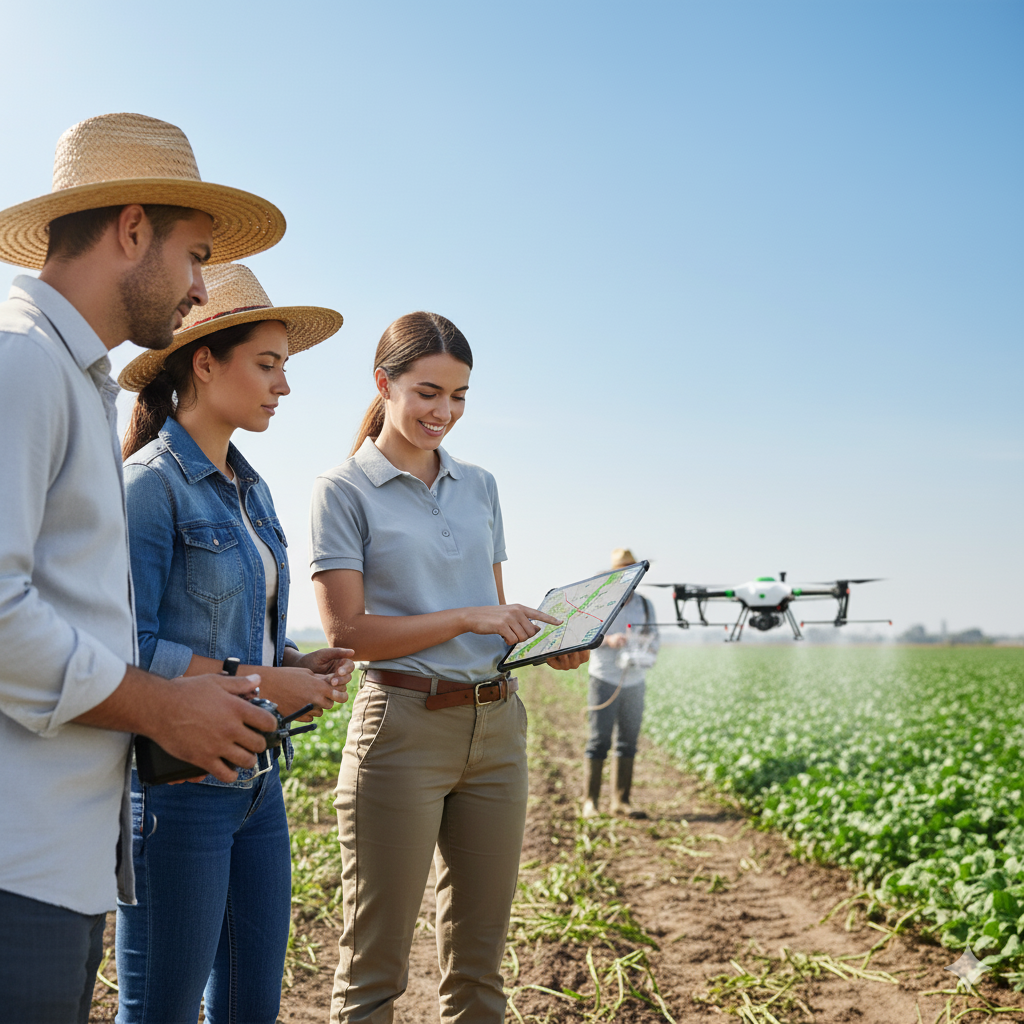
Owning advanced technology is only half the equation; knowing how to operate it effectively is equally important. Companies like Garuda Aerospace have established DGCA-certified drone pilot training programs that enable farmers to become licensed drone pilots. These training sessions cover everything from basic operations to advanced spraying techniques, ensuring farmers can maximize the benefits of their drones.
This empowerment allows farmers to reduce dependency on third-party operators and take full control of their farming practices. For many, learning to fly drones has also opened up new income opportunities—as they can provide spraying and mapping services to neighboring farms.
The Future of Crop Sprayer Drones
The future of farming will undoubtedly see an even deeper integration of drones. Upcoming innovations include:
AI Integration: Smarter drones that analyze crop conditions and automatically adjust spraying patterns.
Swarm Drones: Multiple drones working together to cover vast areas in record time.
Hybrid Drones: Combining battery and fuel power for longer flight times and larger payloads.
Data-Driven Farming: Drones connected with IoT devices and cloud platforms to provide a complete digital farming ecosystem.
As these technologies mature, crop sprayer drones will shift from being optional tools to essential components of farming across the globe.
Final Thoughts
The journey from manual spraying to automated precision marks one of the most significant transformations in agriculture. Crop sprayer drones are not just machines, they are enablers of efficiency, sustainability, and profitability. By saving time, reducing chemical exposure, and delivering precise results, they are helping farmers overcome age-old challenges while preparing them for the future.
For Indian farmers, this revolution is already underway. With support from government subsidies, innovations by local manufacturers, and the growing accessibility of training programs, crop sprayer drones are becoming a common sight in farmlands. The shift is clear: the future of farming is airborne, and the crop sprayer drone is at the heart of it.