Garuda Aerospace | Blogs
Remote Pilot Training (RPTO)
Drone Pilot
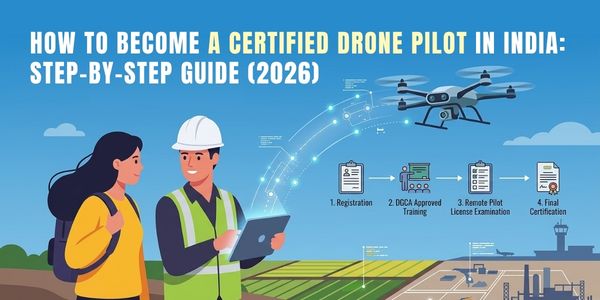
The drone industry in India is growing at an unprecedented pace. From aerial photography and filmmaking to agriculture, surveillance, and infrastructure inspection, drones are transforming how businesses operate. With initiatives like “Drone Shakti” and increasing adoption across sectors, the demand for certified drone pilots in India is rapidly rising.
If you're looking to build a future-proof career or start a high-income skill in 2026, becoming a licensed drone pilot in India is a smart move. However, unlike flying drones for fun, commercial drone operations require proper certification, regulatory compliance, and structured training.
This SEO-optimized guide will walk you through how to become a certified drone pilot in India step by step, along with eligibility, DGCA rules, costs, and career opportunities.
Why Becoming a Certified Drone Pilot in India is a Smart Career Move
The Indian drone market is projected to grow significantly due to government support and increasing enterprise adoption. Industries are actively hiring trained professionals who understand both drone operations and compliance.
Here’s why this career is gaining traction:
- High demand for DGCA-certified drone pilots
- Low competition compared to traditional careers
- Opportunity to freelance or build a business
- Multiple income streams across industries
- Increasing use in government and private sectors
Without certification, you cannot legally operate drones for commercial purposes in India. That’s why obtaining a Remote Pilot Certificate (RPC) is essential
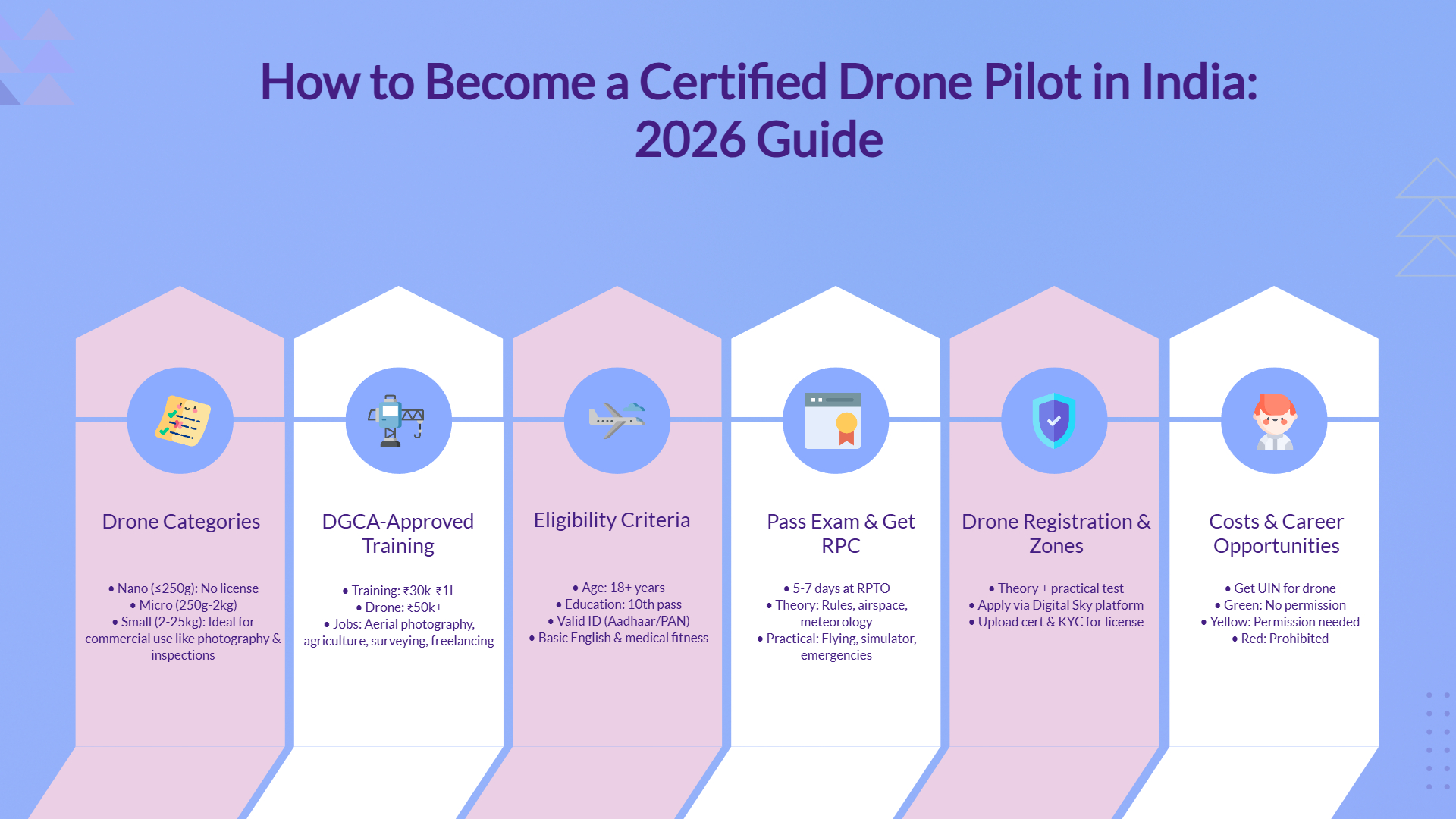
Step 1: Understand Drone Regulations in India (DGCA Rules)
Before you start, you need to understand the regulatory framework.
In India, drone operations are governed by the
Directorate General of Civil Aviation (DGCA) under the Drone Rules, 2021.
Key regulations include:
- Mandatory certification for commercial drone pilots
- Drone registration through the Digital Sky platform
- Airspace classification into Green, Yellow, and Red zones
- Permission requirements before flying
Understanding these rules early will help you avoid legal issues and operate confidently.
Step 2: Check Eligibility Criteria for Drone Pilot License in India
To apply for a drone pilot license in India, you must meet the following criteria:
- Minimum education: 10th pass
- Valid government ID (Aadhaar, PAN, etc.)
- Basic understanding of English
- Medical fitness (as required by training institutes)
These requirements ensure that candidates can safely operate drones and understand aviation protocols.
Step 3: Choose the Right Drone Category
Drones in India are classified based on weight, and your certification depends on the category you choose.
Drone Categories:
- Nano (≤250 grams) – No license required (non-commercial)
For most commercial use cases like photography, videography, and inspections, Micro and Small category drones are ideal.
Choosing the right category is crucial because your DGCA drone pilot training will be aligned with it.
Step 4: Enroll in a DGCA-Approved Drone Training Institute
To legally become a drone pilot in India, you must complete training from a DGCA-approved Remote Pilot Training Organisation (RPTO).
What You’ll Learn:
Theoretical Training
- Drone rules and regulations in India
- Navigation and flight planning
- Safety and risk management
Practical Training
Training Duration
Typically, drone pilot training in India lasts 5 to 7 days.
Choosing a reputed training institute is important because it directly impacts your skill level and confidence.
Step 5: Pass the Drone Pilot Exam
After completing your training, you must pass the drone pilot certification exam conducted by your RPTO.
The exam includes:
- Theory assessment (DGCA rules, airspace, safety)
To succeed, you need a solid understanding of:
Once you pass, you become eligible to apply for your Remote Pilot Certificate (RPC).
Step 6: Apply for Remote Pilot Certificate (RPC) via Digital Sky Platform
After clearing your exam, the next step is applying for your official license.
This is done through the
Digital Sky Platform.
Application Process:
- Register on Digital Sky
- Upload training certificate
- Submit KYC documents
- Apply for RPC
Once approved, you will receive your DGCA-certified drone pilot license, allowing you to operate commercially in India.
Step 7: Register Your Drone (UIN Requirement)
To legally fly a drone in India, your drone must be registered.
Requirements:
- Unique Identification Number (UIN)
- Compliance with DGCA norms
- Geo-fencing capability (if required)
Flying without registration can result in penalties, even if you are a certified pilot.
Step 8: Understand No-Fly Zones and Airspace Rules
Drone flying in India is strictly regulated by airspace zones:
- Green Zone – No permission required
- Yellow Zone – Permission required
- Red Zone – Strictly prohibited
Before every flight, you should check permissions via Digital Sky.
Ignoring airspace restrictions can lead to heavy fines or license suspension.
Step 9: Invest in the Right Drone Equipment
To build a successful career, investing in the right equipment is essential.
Recommended Setup:
- Professional drone (DJI or similar)
- High-quality camera sensors
Your equipment choice should align with your niche, whether it’s aerial photography, surveying, or agriculture drones in India.
Step 10: Build High-Income Skills Around Drone Piloting
Drone flying alone won’t maximize your income. You need complementary skills.
In-Demand Skills:
- Aerial photography and videography
- Video editing (Premiere Pro, DaVinci Resolve)
- Inspection and survey analysis
- Client acquisition and sales
Combining these skills helps you position yourself as a full-service drone professional, not just a pilot.
Step 11: Explore Career Opportunities for Drone Pilots in India
Once certified, you can explore multiple career paths.
High-Demand Opportunities:
- Wedding and event drone photography
- YouTube and content creation
- Agriculture spraying and monitoring
- Infrastructure inspection
You can:
- Join a drone services company
- Start your own drone business
The Indian market is still evolving, which means early movers have a huge advantage.
Step 12: Cost of Becoming a Drone Pilot in India
Understanding the investment required is important.
Estimated Costs:
- Training: ₹30,000 – ₹1,00,000
- Drone purchase: ₹50,000 – ₹2,50,000+
- Accessories: ₹10,000 – ₹30,000
While the upfront investment exists, many drone pilots recover costs within a few months through projects.
Step 13: Stay Updated with Drone Laws in India
Drone regulations in India are evolving.
To stay compliant:
- Renew certifications if required
- Stay informed about new drone policies
Being updated ensures long-term success and avoids legal complications.
Common Mistakes to Avoid as a Beginner Drone Pilot
Many aspiring drone pilots make avoidable mistakes:
- Flying without DGCA certification
- Ignoring airspace restrictions
- Skipping skill development
Avoiding these mistakes will help you grow faster and build a sustainable career.
Final Thoughts: Is Becoming a Drone Pilot in India Worth It?
Becoming a certified drone pilot in India is one of the most promising career opportunities in 2026. With government support, rising demand, and multiple income streams, this field offers both flexibility and scalability.
The process is straightforward:
- Get trained from a DGCA-approved institute
- Pass the certification exam
- Obtain your Remote Pilot Certificate
However, the real success lies in how you position yourself in the market. If you combine drone skills with marketing, branding, and niche specialization, you can build a highly profitable business.