Construction and Infrastructure Monitoring
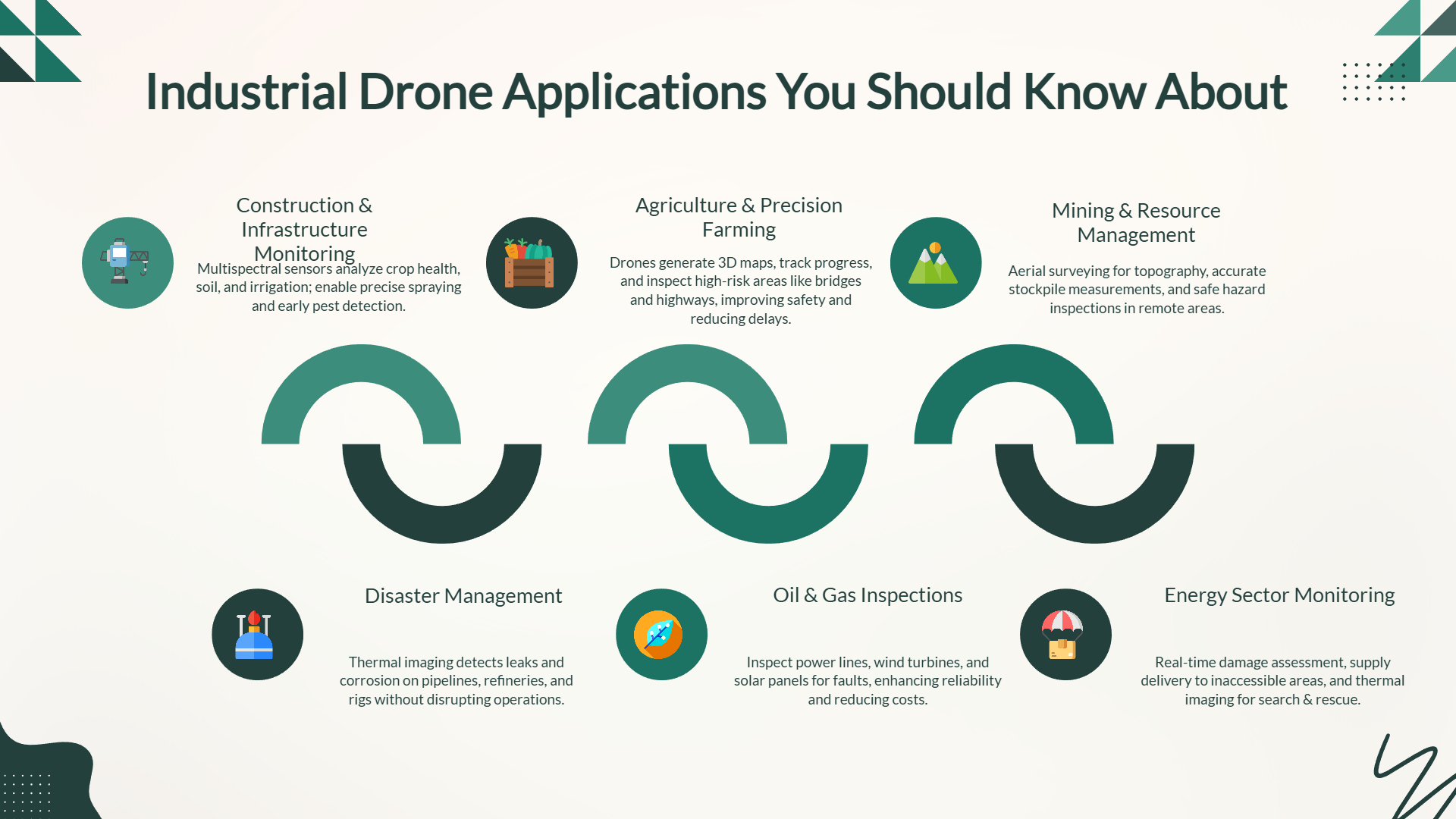
One of the most prominent industrial drone applications is in the construction sector. Drones are widely used for site surveying, progress tracking, and infrastructure inspection.
Traditional surveying methods are time-consuming and often require manual labor across large sites. With drones, construction companies can generate accurate 3D maps and models within hours. This has significantly improved project planning and reduced delays.
Drones also enable real-time monitoring of construction progress. Project managers can capture aerial images and compare them against design plans to ensure everything is on track. This level of visibility enhances accountability and minimizes costly errors.
In infrastructure projects such as bridges, highways, and railways, drones play a crucial role in inspections. They can safely capture data from high-risk areas, reducing the need for human intervention and improving overall safety.
The rise of drone surveying in construction has made it possible to streamline operations while maintaining precision and compliance.
Agriculture and Precision Farming
Agriculture has witnessed a massive transformation with the introduction of drones. Known as precision agriculture drones, these devices help farmers optimize crop yields while minimizing resource usage.
Drones equipped with multispectral sensors can analyze soil conditions, crop health, and irrigation needs. This allows farmers to make data-driven decisions rather than relying on guesswork.
Crop spraying is another significant application. Instead of manually spraying pesticides or fertilizers, drones can cover large fields quickly and uniformly. This not only saves time but also reduces exposure to harmful chemicals.
Additionally, drones are used for monitoring livestock and identifying potential issues early. By providing a bird’s-eye view of farms, they help farmers detect problems such as pest infestations or water stress before they escalate.
The growing adoption of agricultural drone applications is a testament to how technology can revolutionize traditional farming practices.
Mining and Resource Management
Mining operations often take place in hazardous and remote environments. Drones have emerged as a game-changer in this sector by improving both safety and efficiency.
One of the key industrial drone uses in mining is aerial surveying. Drones can quickly map large mining areas, providing accurate topographical data. This helps in planning excavation activities and monitoring resource extraction.
Stockpile measurement is another critical application. Drones can calculate the volume of materials such as coal, ore, and gravel with high accuracy. This eliminates the need for manual measurements and reduces the risk of errors.
Safety inspections are also enhanced with drones. Instead of sending workers into dangerous zones, companies can deploy drones to assess structural integrity and identify potential hazards.
The integration of drone technology in mining has not only improved operational efficiency but also significantly reduced risks for workers.
Oil and Gas Inspections
The oil and gas industry relies heavily on regular inspections to maintain safety and compliance. Drones have become an essential tool for conducting these inspections efficiently.
Pipelines, refineries, and offshore rigs are often located in challenging environments. Drones can access these areas بسهولة and capture detailed visuals without disrupting operations.
Thermal imaging cameras mounted on drones can detect leaks, corrosion, and other anomalies that are not visible to the naked eye. This allows companies to address issues proactively and prevent costly failures.
By using drones for industrial inspections, companies can reduce downtime and improve maintenance strategies. The ability to collect real-time data has transformed how inspections are conducted in the oil and gas sector.
Energy Sector and Power Line Monitoring
Energy companies are increasingly adopting drones for monitoring power lines, wind turbines, and solar panels. These assets require regular inspections to ensure optimal performance.
Drones can fly along power lines and capture high-resolution images to identify faults or damage. This eliminates the need for manual inspections, which are often risky and time-consuming.
In the renewable energy sector, drones are used to inspect wind turbines and solar farms. They can detect issues such as blade damage or panel defects quickly, enabling timely maintenance.
The use of drones in the energy industry has improved reliability and reduced operational costs. It also supports the transition toward more sustainable energy solutions.
Logistics and Delivery Services
The concept of drone delivery is no longer a distant dream. Many companies are actively exploring and implementing drone delivery systems to revolutionize logistics.
Drones can transport goods quickly, especially in areas with limited infrastructure. This is particularly useful for delivering medical supplies to remote locations.
In urban environments, drones have the potential to reduce traffic congestion and improve delivery times. They can bypass traditional transportation challenges and provide faster service.
Although regulatory challenges still exist, the future of drone logistics applications looks promising. As technology advances, we can expect drones to play a significant role in last-mile delivery.
Disaster Management and Emergency Response
Drones have proven to be invaluable in disaster management scenarios. Their ability to provide real-time aerial data makes them a critical tool for emergency response teams.
During natural disasters such as floods, earthquakes, or wildfires, drones can assess damage quickly and identify affected areas. This helps authorities plan rescue operations more effectively.
Drones are also used to deliver essential supplies, such as food and medical aid, to areas that are difficult to access. In search and rescue missions, they can locate survivors using thermal imaging.
The application of drones in disaster management has significantly improved response times and saved countless lives.
Environmental Monitoring and Conservation
Environmental conservation efforts have greatly benefited from drone technology. Drones are used to monitor wildlife, track deforestation, and assess environmental changes.
In wildlife conservation, drones help researchers observe animals without disturbing their natural habitats. This provides valuable insights into behavior and population trends.
Drones are also used to monitor illegal activities such as poaching and deforestation. By providing real-time data, they enable authorities to take immediate action.
The role of drones in environmental monitoring highlights their importance in protecting our planet and promoting sustainable practices.
Manufacturing and Warehouse Management
In the manufacturing sector, drones are being used to improve efficiency in inventory management and facility inspections.
Drones equipped with scanning technology can navigate warehouses and track inventory in real time. This reduces the need for manual stock checks and minimizes errors.
They are also used for inspecting large manufacturing facilities. Drones can access hard-to-reach areas and identify potential issues before they escalate.
The adoption of drones in manufacturing is helping companies streamline operations and enhance productivity.
Telecommunications and Network Maintenance
Telecommunication companies rely on drones for maintaining and inspecting network infrastructure. Towers and antennas are often located in remote or elevated areas, making manual inspections challenging.
Drones can quickly assess the condition of these structures and identify issues such as damage or misalignment. This ensures uninterrupted connectivity and reduces maintenance costs.
The use of drones in telecom industry has improved the efficiency of network maintenance and expanded coverage in remote regions.
Security and Surveillance
Security is another area where drones are making a significant impact. They are widely used for surveillance in industrial facilities, public spaces, and critical infrastructure.
Drones can monitor large areas in real time and provide live video feeds. This enhances situational awareness and enables quick response to potential threats.
In industries such as mining, oil and gas, and construction, drones are used to ensure site security and prevent unauthorized access.
The integration of drone surveillance applications has strengthened security measures across various sectors.
The Future of Industrial Drone Applications
The future of drones in industry is incredibly promising. Advancements in artificial intelligence, machine learning, and automation are expected to further enhance their capabilities.
Autonomous drones will be able to perform complex tasks without human intervention. Integration with IoT systems will enable seamless data sharing and real-time decision-making.
As regulations evolve and technology becomes more accessible, the adoption of industrial drone technology will continue to grow. Businesses that embrace this transformation will gain a competitive edge in their respective industries.
Conclusion
Drones have become a cornerstone of modern industrial operations. Their versatility and efficiency make them an essential tool across a wide range of sectors.
From construction and agriculture to logistics and environmental conservation, the applications of drones are vast and continually expanding. By leveraging industrial drone applications, businesses can improve productivity, enhance safety, and make data-driven decisions.
As technology continues to evolve, drones will play an even more significant role in shaping the future of industries worldwide. Understanding and adopting these innovations is key to staying ahead in an increasingly competitive landscape.