Industrial-grade drones are used wherever data must be collected safely, quickly, and accurately. They replace slow manual checks, reduce risk to workers, and give teams a clear aerial view of large or dangerous sites. Here are the major sectors.
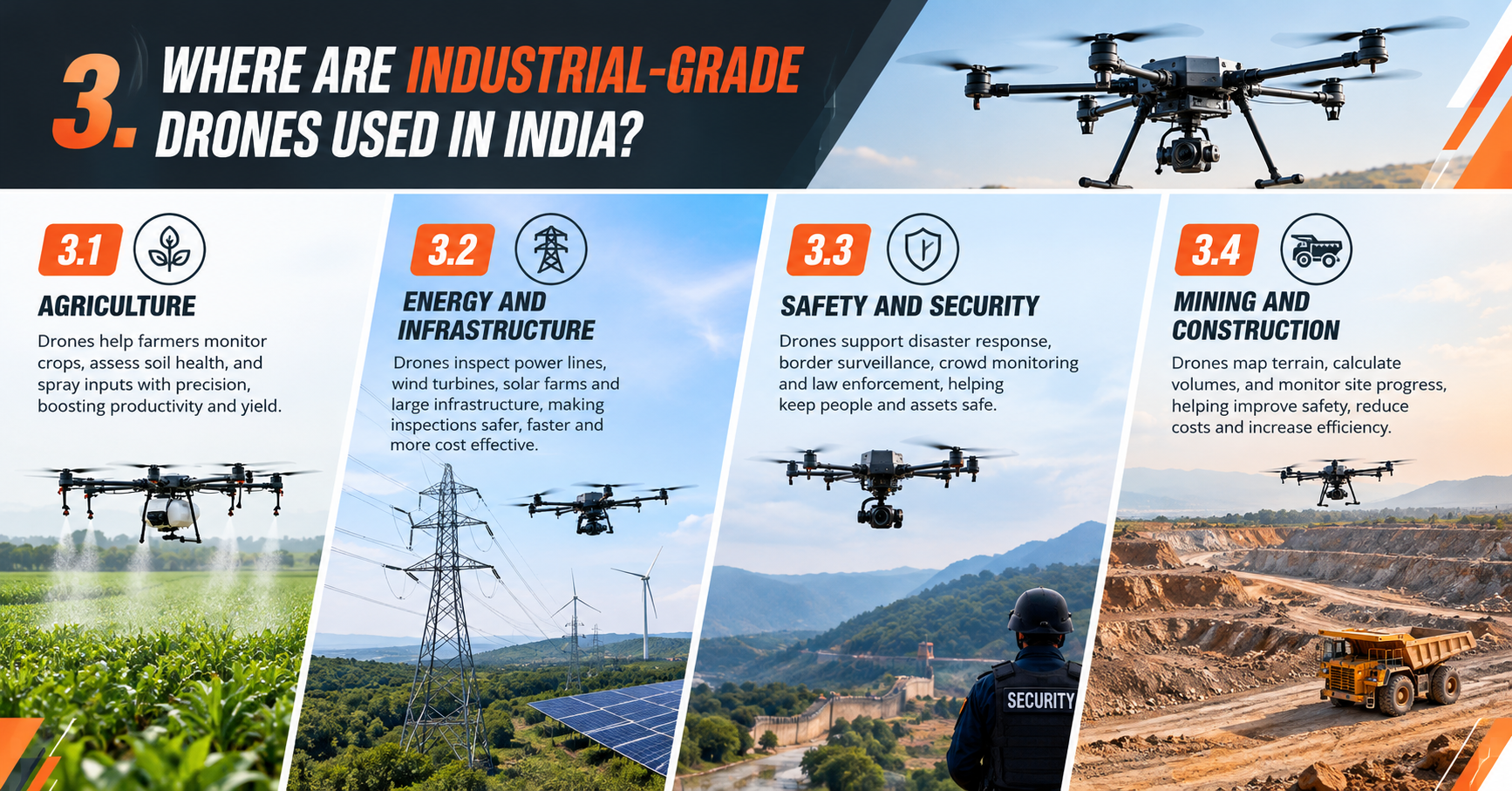
3.1 Agriculture
In farming, drones scan fields for crop stress, pests, and nutrient gaps. Precision agriculture drones also handle targeted spraying, which cuts chemical use and labor costs. Farmers gain faster decisions and better yield forecasts across large holdings.
3.2 Energy and Infrastructure
Power lines, solar farms, wind turbines, bridges, and pipelines need frequent checks. Drones with thermal and zoom cameras spot overheating, cracks, and corrosion without shutdowns or scaffolding. This improves safety and supports predictive maintenance.
3.3 Safety and Security
Drones give security teams live aerial views for perimeter patrol, crowd monitoring, and disaster response. Many organizations adopt safety and security solutions built on drone data to spot threats earlier and respond faster.
3.4 Mining and Construction
Drones measure stockpiles, track earthwork progress, and compare as-built structures against design models. They create 3D maps in hours instead of days. This lowers rework and keeps projects on schedule.
4. How to Choose What Industrial-Grade Drones Fit Your Mission
The right industrial-grade drone is the one that matches your payload, endurance, and weather needs. Follow these five steps to make a confident choice.
Step 1: Define the mission. Write down what you need to capture, such as thermal faults, terrain models, or crop health. The mission decides the sensor, and the sensor decides the aircraft.
Step 2: Check payload capacity. Add up the weight of your sensors and accessories. Choose a platform with a comfortable margin above that number.
Step 3: Match endurance to area. Large corridors and farms favor long-endurance or hybrid power. Small detailed inspections suit compact multirotors.
Step 4: Verify weather tolerance. Ask about wind limits, rain rating, and operating temperatures. Reliability on a bad day matters more than performance on a good one.
Step 5: Consider the service model. If you do not want to own a fleet, Drone-as-a-Service lets you hire pilots, aircraft, and data processing for each project.
5. Who Are War Drone Manufacturers in India?
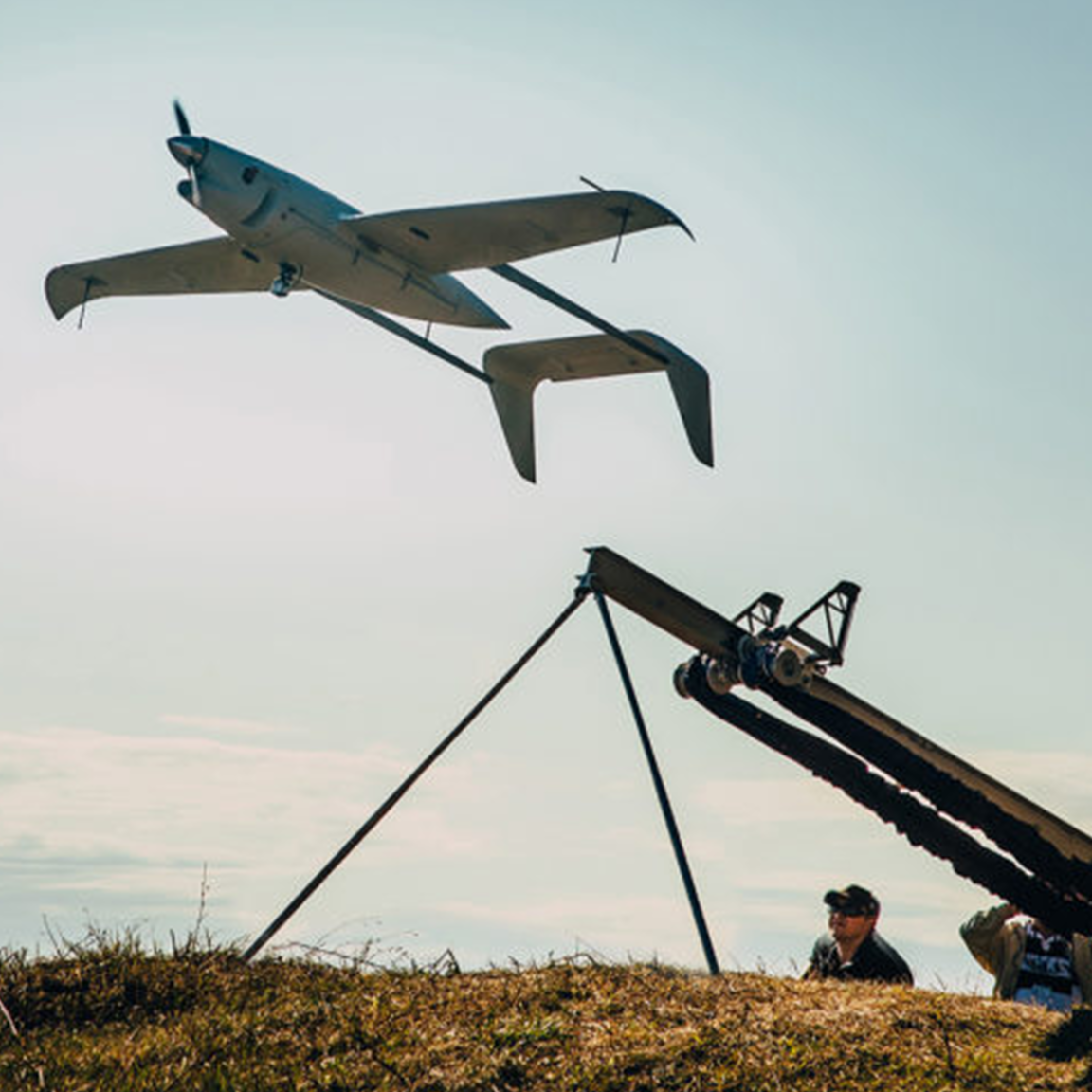
War drone manufacturers in India are defense-focused companies that design unmanned aircraft for surveillance, reconnaissance, logistics, and tactical support. The term is commonly used online, but the industry usually calls them defense or military drone manufacturers. They work with the armed forces, research bodies, and private partners.
The Indian defense drone ecosystem has grown quickly through government programs that encourage local production. Companies now build indigenous airframes, payloads, and communication systems rather than relying only on imports. A growing range of defense drones now supports border monitoring, situational awareness, and field logistics.
Typical roles of defense drones:
- Border and coastal surveillance
- Reconnaissance in rough terrain
- Logistics and supply to remote posts
- Damage assessment after incidents
- Training and simulation support
6. What Standards Do Defense Drone Manufacturers Follow?
Defense drone manufacturers follow stricter standards than commercial builders because missions are higher risk. Platforms must handle shocks, extreme temperatures, and secure communication. Quality checks, documented testing, and traceable components are part of the process.
Requirement | Why It Matters |
Rugged build | Survives vibration, dust, and moisture |
Encrypted datalink | Protects control and video from interception |
Long endurance | Supports extended patrol missions |
Redundancy | Keeps the aircraft flying after a failure |
Indigenous content | Aligns with national self-reliance goals |
Test records | Proves reliability before deployment |
7. What Rules and Skills Do You Need to Operate Industrial-Grade Drones?
Operating industrial-grade drones in India requires compliance with DGCA rules and a trained, certified pilot. Heavier drones and special sensors usually fall under stricter categories. Beyond visual line of sight operations need extra approvals and risk planning.
Skilled operators are as important as the aircraft. A structured drone pilot training program covers airspace rules, weather reading, flight planning, and emergency handling. Well-trained pilots protect assets, keep data consistent, and help organizations stay compliant as regulations evolve.
8. Conclusion
Understanding what industrial-grade drones are helps you see why they have become essential across Indian industry and defense. Their strength comes from payload, endurance, reliability, and data quality. Choose by mission, verify weather limits, and train your pilots well. As manufacturers keep innovating, these platforms will take on even more complex tasks.
Which sector are you planning to use drones in: farming, infrastructure, or security? Tell me, and I can tailor the next article.
9. FAQs: What Are Industrial-Grade Drones?
What are industrial-grade drones in simple words?
They are tough, high-capacity drones built for professional work such as inspection, mapping, farming, and security.
Are industrial-grade drones the same as defense drones?
No. Many share similar technology, but defense drones add secure communication and mission-specific hardening.
Do I need a license to fly them in India?
Yes. Most commercial operations need a certified remote pilot and compliance with DGCA regulations.
How much payload can they carry?
It varies widely, from a few kilograms to nearly 20 kg or more on heavy-lift models.