Why a Big Drone with Camera is Best for Agriculture, Surveillance & Industry
Big drone with camera technology have become one of the most impactful innovations across agriculture, surveillance, and industrial sectors. Unlike smaller drones that focus primarily on photography, big drones are designed for serious applications. With higher payload capacities, extended flight times, and advanced imaging systems, they have transformed the way industries collect data, monitor assets, and improve efficiency.
In India, where farming supports nearly 60% of the population and industries are rapidly modernizing, the role of drones has grown immensely. Garuda Aerospace, a leading Indian drone manufacturer, spearheaded this movement by building DGCA-approved drones tailored for professional use. Whether it’s the Kisan Agri Drone V.2 for precision farming or the Droni Drone for aerial imaging and surveillance, these big drones are unlocking opportunities that were once unimaginable.
This blog explores why big drones with cameras are becoming indispensable, their benefits across key sectors, and how they are shaping the future of aerial technology.
The Unique Advantages of a Big Drone with Camera
Agriculture is one of the most promising fields for drone adoption. Traditional farming is labor-intensive, time-consuming, and often inefficient. Big drones with cameras solve many of these issues through automation and precision.
Crop Health Monitoring
Big drones equipped with high-resolution and multispectral cameras make this task faster, more accurate, and data-driven.
How it works: Multispectral imaging captures data beyond the visible spectrum, identifying early signs of stress that the naked eye cannot detect. This includes pest infestations, nutrient deficiencies, and water stress.
Impact: Farmers can act before issues spread across the field, protecting yields and reducing the cost of treatment. For example, a drone can highlight a small patch of pest-affected crops, allowing the farmer to target that specific area instead of applying pesticides everywhere.
Precision Spraying
Traditional spraying often leads to over-application in some areas and under-application in others, causing wastage and crop damage.
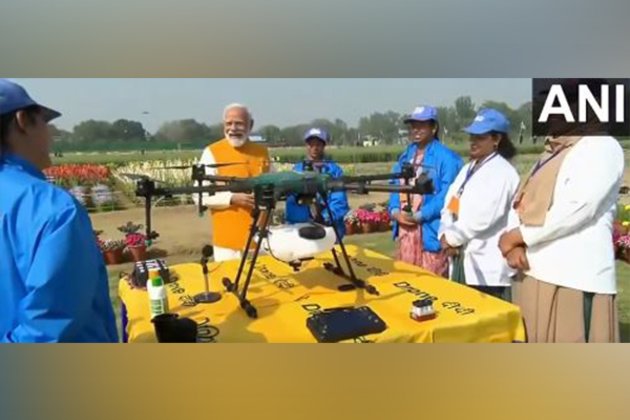
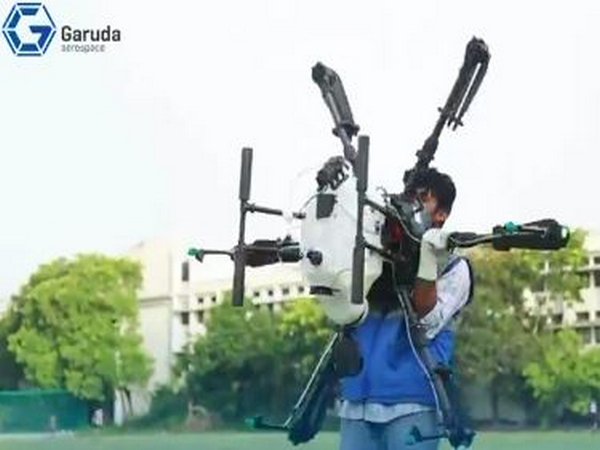
How big drones help: Kisan Agri Drone comes with large spray tanks and spraying systems. These drones fly at optimized altitudes and cover large areas uniformly, ensuring even distribution of chemicals.
Efficiency gains: Studies show that precision spraying through drones can reduce chemical use by up to 30–40%, saving costs for farmers and lowering environmental impact. Moreover, a big drone can cover several acres in just a few hours, something that would take days with manual spraying.
Soil & Irrigation Management
Inefficient irrigation systems often lead to waterlogging in some areas and dryness in others, reducing crop quality.
Drone role: drones equipped with advanced cameras and sensors can map soil moisture levels across fields. This data helps farmers understand which zones are dry and which are oversaturated.
Practical benefit: Farmers can then adjust irrigation systems, such as drip or sprinkler setups, to deliver the right amount of water to the right place. Over time, this leads to better water conservation, reduced costs, and improved soil health.
Big Drone with Camera for Industrial and Environmental Use
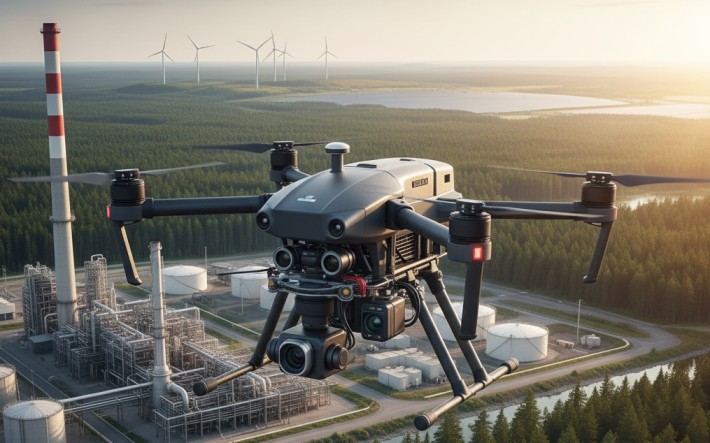
Manual inspections of large industrial assets are costly, dangerous, and time-consuming. Big drones solve this challenge with safe, fast, and cost-effective monitoring.
Industrial and Commercial Applications of Drones
The use of drones has rapidly expanded beyond defense and agriculture, becoming a transformative tool for industries and governments alike. Advanced UAVs equipped with high-resolution cameras, thermal sensors, and AI-driven analytics are now a part of routine operations across multiple sectors.
Infrastructure Inspection
Inspecting construction & infrastructure like bridges, roads, and high-rise buildings traditionally requires scaffolding, cranes, or shutting down sections for manual evaluation. This process is not only costly but also time-consuming and sometimes dangerous for workers. Drones provide a safer, faster, and more cost-effective alternative. Equipped with advanced imaging systems, drones can hover close to structures, capturing detailed visuals that reveal cracks, corrosion, water leakage, or other structural weaknesses.
Power and Utilities
Power transmission lines stretch for hundreds of kilometers across varied terrain, making inspections extremely challenging. With drones, operators can fly along these lines, capturing high-resolution imagery and thermal scans to identify overheating, broken insulators, or damaged conductors—all without shutting down the grid.
Oil and Gas Industry
Pipeline inspection across remote and hazardous areas can now be done quickly using drones, detecting leaks or unauthorized construction nearby. Offshore rigs, which are complex and exposed to harsh marine conditions, also benefit from drone-based monitoring. UAVs can access areas too dangerous for humans, capturing real-time visuals and sending back actionable data. This reduces reliance on helicopters and divers, minimizing risk and expense. With environmental regulations tightening, drones are also helping oil and gas companies meet compliance by detecting leaks early and reducing spillage risks.
Mining Applications
In the mining industry, drones have revolutionized surveying and monitoring. Open-cast mines, stockpiles, and haul roads can be mapped in a fraction of the time it would take surveyors on the ground. Drones can also monitor slope stability, detect unauthorized entry, and ensure compliance with safety regulations. By minimizing manual surveying, drones reduce accidents while improving productivity in what is often a hazardous work environment.
Logistics and Delivery
Another fast-emerging application of drones is in logistics and last-mile delivery. Large industrial sites such as factories, shipyards, or mining complexes often face delays in transporting small tools, medical supplies, or spare parts across wide areas. Drones can bridge this gap quickly and efficiently. By reducing reliance on ground vehicles or manual runners, companies save time and ensure critical parts or first-aid supplies reach their destination without delay. While large-scale commercial drone delivery is still evolving, within controlled industrial environments, drones are already proving their worth.
Cost Savings Across Sectors
One of the biggest drivers for drone adoption is the significant cost savings they deliver.
Farmers save money by reducing chemical use through precision spraying and improving yields with crop health monitoring.
Industries lower inspection costs by replacing cranes, scaffolding, or helicopters with drones.
Governments cut manpower requirements for infrastructure inspection, land surveys, or disaster monitoring.
Time Efficiency
Tasks that once required days or weeks are now completed in mere hours. For example, manually inspecting a 10-kilometer power line might take several workers and multiple days. With drones, the same inspection can be done within hours with greater accuracy. Similarly, crop spraying that once took farmers days of labor can now be completed in a single afternoon using agri-drones like Garuda’s Kisan Drone.
Safety Benefits
Perhaps one of the most important advantages of drones is their role in reducing human exposure to hazardous environments. Farmers no longer need to carry pesticide tanks and spray manually, reducing chemical exposure. Utility workers avoid climbing high-voltage towers. Inspectors don’t have to dangle from scaffolding or risk their lives on offshore rigs.
Sustainability and Environmental Benefits
Finally, drones are playing a major role in promoting sustainability. In agriculture, precision spraying reduces chemical usage by up to 30–40%, lowering harmful runoff into soil and water bodies. Optimized irrigation helps conserve water, a critical resource in drought-prone regions. In industries, drones minimize the use of heavy machinery during inspections, reducing fuel consumption and lowering carbon footprints. Even in logistics, drone deliveries reduce reliance on traditional vehicles, cutting emissions.
Training the Next Generation of Drone Pilots
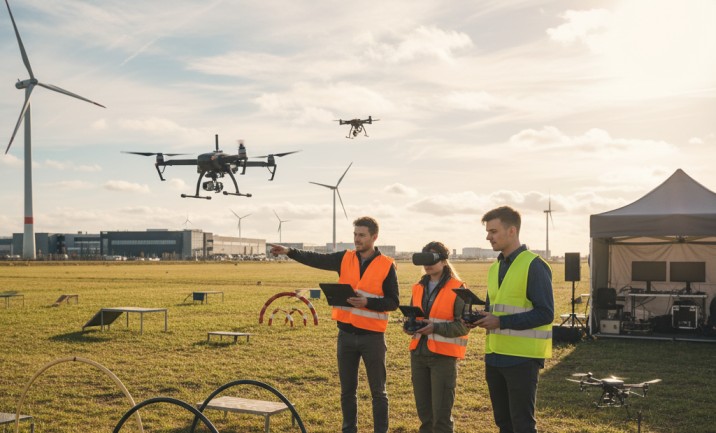
Comprehensive DGCA-Certified Training Programs
The company runs a wide range of DGCA-certified Remote Pilot Training Organization (RPTO) courses, designed to cater to different categories of learners. Whether someone is a farmer wanting to spray fields with agri-drones or a young graduate exploring a career in drone operations, Garuda provides structured programs tailored to their needs.
Training is not limited to just flying drones; it also covers theoretical knowledge, hands-on flight practice, airspace regulations, safety protocols, and real-world applications. This holistic approach ensures graduates not only know how to operate drones but also understand how to integrate them effectively into business and industry.
Empowering Farmers with Drone Skills
One of the most impactful aspects of Garuda’s training is its accessibility to farmers. Traditionally, farmers have had to depend on third-party service providers for tasks like aerial spraying, crop monitoring, or irrigation mapping.
A farmer trained by Garuda can use the Kisan Agri Drone to spray fertilizers and pesticides evenly across fields, saving time and reducing costs by minimizing chemical wastage.
With their own certification, farmers are no longer dependent on others and can also offer drone spraying as a service to neighboring farms, creating an additional income stream.
Opening Career Opportunities for Young Professionals
For young professionals, drone pilot training is becoming one of the most promising career pathways in India’s growing UAV sector. Industries such as agriculture, logistics, infrastructure, and surveillance are rapidly adopting drone technology, creating a high demand for certified pilots.
Graduates from Garuda’s RPTO programs are well-positioned to take advantage of these opportunities. For instance:
In Transportation and logistics, drones are being used for aerial mapping, inspections, and even delivery trials.
In agriculture, pilots are needed not just to fly crop-spraying drones but also to manage drone-as-a-service businesses for farming communities.
Real-World Applications Beyond the Classroom
What makes Garuda’s training truly stand out is its emphasis on real-world applications. Trainees don’t just learn to fly; they are exposed to actual scenarios where drones are making a difference. For example:
Monitoring large-scale construction projects for infrastructure companies.
Assisting in search-and-rescue missions during floods or natural disasters.
Conducting precision spraying and crop health analysis in agriculture.
This experiential learning approach bridges the gap between theoretical knowledge and practical deployment, giving trainees confidence to step into the professional world.
This ecosystem approach is critical for the future. As more pilots are trained, drones can be integrated across industries at scale, ensuring that the benefits of automation, precision, and efficiency reach every sector from small farmers in rural areas to large industrial corporations.
Final Thoughts
The rise of the big drone with camera is more than a technological advancement—it’s a revolution. By bridging gaps across agriculture, surveillance, and industry, these drones are saving time, reducing costs, improving safety, and ensuring sustainability.
Farmers are producing higher yields with less input, industries are running safer and more efficient operations, and security forces are gaining smarter tools for real-time monitoring. Backed by innovative Indian manufacturers like Garuda Aerospace, this revolution is not just about adopting drones—it’s about reimagining how work gets done.
For anyone in agriculture, surveillance, or industry, investing in a big drone with a camera today means building a foundation for greater efficiency, resilience, and future growth tomorrow.