.png)
The rapid growth of India’s drone ecosystem has transformed the way industries operate from agriculture and mining to surveillance, logistics, emergency response, and infrastructure monitoring. As drones become more integrated into everyday commercial operations, the need for certified, skilled, and responsible drone pilots has reached an all-time high. Whether someone wants to become a professional drone operator, enter the booming UAV industry, or build a career in agri-tech, it is essential to understand how to obtain a drone license in a structured and compliant manner. A drone license is more than a legal mandate; it is a credential that proves you are trained, knowledgeable, and capable of handling advanced UAV systems safely and professionally.
Today, India is witnessing unprecedented demand for certified drone pilots, especially after the Digital Sky initiative and the Drone Rules, simplified licensing requirements. Industries are actively hiring skilled flyers who can map large terrains, monitor crops, inspect industrial assets, and conduct high-precision aerial operations. As drone technology becomes mainstream, the role of a trained and licensed pilot becomes indispensable, unlocking opportunities across agriculture, defense, construction, renewable energy, and smart city operations.
Among the key organizations leading this transformation is Garuda Aerospace, India’s most influential and fast-growing drone company. Known for its DGCA-certified training programs, advanced drone fleet, and partnerships with top global and government agencies, Garuda plays a pivotal role in shaping the next generation of drone professionals in India.
Understanding Drone Licensing in India
Before beginning the licensing journey, it is crucial to understand what a drone license actually is and why it is mandatory. In India, anyone flying a drone categorized above the Nano category requires a Remote Pilot Certificate (RPC) issued through a DGCA-authorized training organization. This certificate ensures the operator understands flight handling, safety protocols, aviation rules, and technical aspects required for safe and efficient drone operations.
The Directorate General of Civil Aviation (DGCA) has established clear guidelines that define drone categories, operational limitations, airspace regulations, and the training requirements necessary to become a certified remote pilot. These rules are designed to ensure that drones do not interfere with commercial aircraft, violate privacy, or pose safety risks to people and property.
Licensing is mandatory for flying Micro, Small, Medium, or Large drones, which are widely used in farming, surveying, cinematography, security, and industrial applications. Because professional drones such as Garuda’s Kisan Drone and Droni Drone are highly capable systems, they require skilled hands and compliant licensing to operate legally.
Related Reads: Your 6-Day Journey on How to Become a Drone Pilot Instructor with Garuda Aerospace
Who Needs a Drone License?
Anyone intending to use a drone for commercial, industrial, or large-scale agricultural applications must hold a valid Remote Pilot Certificate. Farmers using drones for spraying or monitoring crops, survey professionals mapping land, mining operators conducting volumetric analysis, and individuals offering drone-based services all need to be certified.
With drones becoming central to modern farming, precision agriculture, and infrastructure inspection, the number of individuals seeking professional training is increasing rapidly. This demand has led to the rise of high-quality training institutions such as Garuda Aerospace, which not only trains pilots but also equips them with industry-ready skills.
How to Obtain a Drone License - Eligibility Requirements
.jpg)
To begin training, an applicant must meet basic eligibility requirements as outlined by the DGCA. They must be at least 18 years old and pass a 10th-grade examination from a recognized board. Physical and mental fitness are also crucial, as operating a drone requires alertness, hand-eye coordination, and the ability to interpret real-time aerial data.
These requirements ensure that pilots possess foundational knowledge and the maturity needed to participate in a regulated airspace environment safely.
How the Drone Licensing Process Works
Understanding how to obtain a drone license in India involves a structured training program followed by an evaluation conducted by a DGCA-certified Drone Training Organization (DTO). The process begins with enrollment in a certified course designed to provide hands-on experience and theoretical knowledge.
Training includes understanding drone components, flight dynamics, maintenance procedures, battery management, payload handling, emergency scenarios, and real-time mission execution. In addition to practical flying sessions, trainees learn about aviation regulations, airspace classification, weather interpretation, and operational ethics, all essential parts of learning how to obtain a drone license successfully.
Once the training program is completed, the candidate appears for an assessment conducted by authorized instructors. If the candidate passes all criteria, the DTO uploads the results to the DGCA’s Digital Sky portal, and the Remote Pilot Certificate is issued digitally. This structured journey ensures that every licensed operator meets safety and regulatory standards and is prepared to operate drones in professional environments.
Why Garuda Aerospace Stands Out in Drone Pilot Training
Garuda Aerospace is at the forefront of India’s drone revolution, not only through its advanced drone manufacturing capabilities but also through its commitment to building skilled human capital. As a DGCA-certified organization authorized for both drone manufacturing and drone pilot training, Garuda offers some of the most comprehensive and industry-relevant programs available in the country, ideal for anyone wanting to learn how to obtain a drone license and build a career in the drone ecosystem.
Garuda is backed by leading institutions and partners, including DRDO, Tata Elxsi, Thales, and major educational and agricultural bodies. Garuda’s training centers are equipped with modern infrastructure, safe flying zones, and experienced trainers who bring real-world knowledge from agricultural spraying missions, disaster management projects, surveillance operations, and national-level deployments.
Most importantly, Garuda’s emphasis on accessible and affordable training has empowered thousands of farmers, youth, professionals, and entrepreneurs to develop future-ready drone careers.
Garuda Aerospace Drone Pilot Training Programs
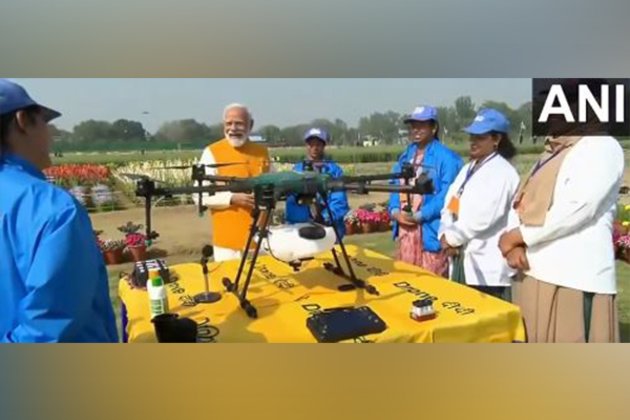
Garuda offers a suite of DGCA-approved drone courses tailored to different skill levels and industry requirements. These include Small Class Drone Pilot Training for eight days, Small and Medium Class Training for thirteen days, Top-up Medium Class Training for five days, Medium Class Training for eight days, and the Remote Pilot Instructor Course for six days. Each program blends classroom learning with practical flying sessions, regulatory knowledge, mission planning, emergency management, and maintenance procedures ideal for anyone wanting to understand how to obtain a drone license.
These programs are designed to ensure that trainees can confidently operate high-performance drones like the Kisan Drone, which is used for precision agriculture, spraying, mapping, crop management, and field insights; and the Droni Drone, which is built for surveillance, mapping, aerial imaging, and multipurpose operations.
The curriculum helps trainees move beyond basic flying to understand how drones are utilized in real agricultural fields, industrial sites, emergency zones, and infrastructural environments. Graduates of Garuda’s programs are industry-ready, certified, and capable of delivering specialized services across sectors.
The Role of Garuda Drones in Driving Industry Transformation
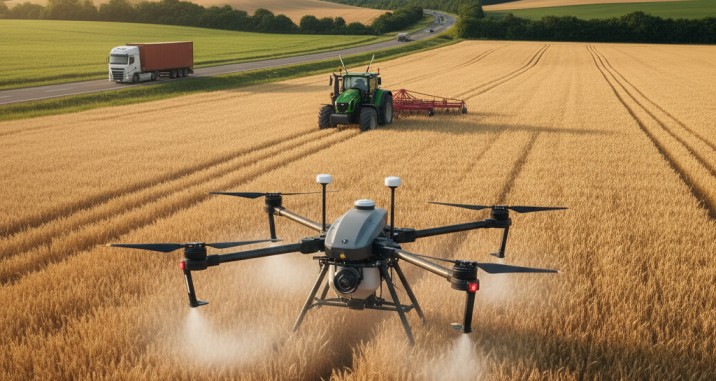
Garuda’s Kisan and Droni drones are revolutionizing agriculture and industry. The Kisan Drone enables farmers to spray nutrients and pesticides efficiently, map fields, monitor crop health, and manage irrigation needs. With high flight endurance, advanced imaging, intelligent fail-safe features, and precision spraying capabilities, it helps farmers save input costs and maximize yields.
The Droni Drone supports a wide range of applications, including mapping, surveying, surveillance, event coverage, and industrial inspection. Its long-range connectivity, powerful imaging systems, stable flight mechanics, and payload support make it an excellent tool for modern enterprises.
Across India, these drones are helping farmers manage soil health, identify crop stress, plan irrigation, and monitor livestock. They also support infrastructure projects, disaster relief missions, and environmental conservation activities.
Related Reads: Ignoring UAV for Agriculture Could Be Costing You More Than You Think
The Cost and Time Involved in Getting a Drone License
The time taken to obtain a drone license depends on the chosen training program, but most individuals complete training and certification within one to two weeks. Costs vary based on drone class, training duration, and the institution’s infrastructure. Investing in certification is worthwhile because a licensed pilot can access a growing job market, start service-based businesses, or partner with agricultural communities seeking drone-based spraying, mapping operations, and supporting tasks related to planting and reforestation.
Tips and Secrets to Succeed as a Drone Pilot
Becoming an exceptional drone pilot requires more than passing an exam. Commitment to safety, continuous learning, and real-world experience set great pilots apart. Understanding how to obtain a drone license is just the first step, practicing regularly, upgrading skills with medium-class and advanced drones, understanding weather conditions, and staying updated on DGCA regulations contribute to long-term success.
Choosing the right training provider is equally crucial. With Garuda Aerospace’s hands-on programs and industry-aligned training methods, students receive a strong foundation that prepares them for diverse operational challenges across agriculture, defense, construction, and environmental sectors.
Conclusion: Your Journey Towards Becoming a Certified Drone Pilot Begins Now
Drone licensing is a gateway to one of India’s fastest-growing technological careers. As UAV adoption accelerates across industries, certified pilots will continue to be in high demand. By choosing a reputable training provider like Garuda Aerospace, aspiring pilots can ensure they receive the knowledge, skills, and certification needed to excel in this transformative field.
If you are ready to build a career in drone technology, enhance your farming operations, or explore new entrepreneurial opportunities, Garuda Aerospace offers the perfect starting point through its DGCA-approved training programs and world-class drones.