Opportunities You’re Losing Without a UAV Pilot Licence in India
India's drone industry is undergoing a remarkable transformation, impacting various fields such as agriculture, infrastructure, surveillance, logistics, and cinematography. However, this rapid growth brings with it an immediate need for skilled and certified professionals who can operate drones both safely and legally. That’s where the UAV pilot license comes into play. Without it, you’re not just facing legal restrictions—you’re also missing out on the incredible opportunities emerging in this booming sector.
This blog dives into everything you need to know about obtaining your UAV pilot license in India, particularly through DGCA-authorized institutions like Garuda Aerospace. From training and qualifications to costs and career prospects, here’s your all-in-one guide.
How to Get a Drone Flying License in India: Your Step-by-Step Guide
1. Eligibility Check
Before you can begin your journey to becoming a certified drone pilot in India, you need to meet the basic eligibility criteria set by the Directorate General of Civil Aviation (DGCA).
You must:
Be at least 18 years old.
Have completed Class 10 (Matriculation) from a recognized board.
Be medically fit, meaning you should be in good physical and mental health to operate drones safely and responsibly.
These requirements ensure that every pilot has the basic educational foundation and physical ability to undergo training and operate UAVs (Unmanned Aerial Vehicles) safely in both rural and urban airspaces.
2. Choose a DGCA-Approved Training Institute
Once you meet the eligibility requirements, the next step is selecting a DGCA-approved Remote Pilot Training Organization (RPTO). One of the most recognized names in this field is Garuda Aerospace, a DGCA-certified drone manufacturer and training provider.
Garuda offers comprehensive training programs tailored to various drone categories and use cases—including agriculture, mapping, surveillance, inspection, and more.
What sets Garuda apart is their practical, hands-on approach. Their instructors are industry veterans, and their training modules include:
By choosing a trusted RPTO like Garuda Aerospace, you gain access to a well-rounded learning environment that not only prepares you to fly but also to navigate the regulatory and commercial aspects of drone operations.
3. Enroll in DGCA-Certified Drone Pilot Training
After registering, it’s time to enroll in a certified training program. Garuda Aerospace offers drone pilot courses aligned with DGCA norms, categorized by drone size and operational needs:
Small Class Drone Training (ideal for light-weight commercial use)
Medium Class Drone Training (for more complex operations)
Remote Pilot Instructor Course (for those looking to train others)
The curriculum typically spans 5 to 13 days, depending on the course level. Modules cover:
Air navigation and drone regulations
Weather and flight conditions
Drone hardware and software systems
Emergency procedures and real-time operations
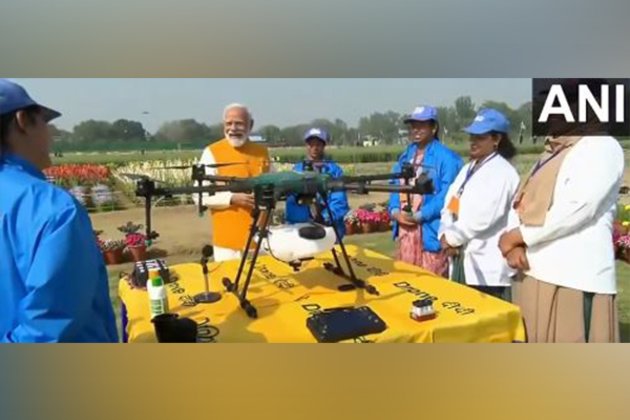
Students receive both classroom instruction and real-world training with drones like the Kisan Drone for agricultural tasks and Droni Drone for aerial photography and surveillance.
4. Complete the Course & Pass the Test
Certification isn’t automatic—you must complete the course and pass the final assessment. The test is conducted as per DGCA guidelines and includes:
Theoretical Exam (Multiple Choice Questions on airspace, safety, meteorology, drone laws, etc.)
Simulator Training (to simulate real-life challenges and reactions)
Flight Test (where you demonstrate your drone handling skills live)
Garuda’s training includes mock tests, revision sessions, and personalized guidance, helping students build confidence for their assessment. After successfully clearing the course, you will be issued a Certificate, which is uploaded and verified on the Digital Sky Platform.
5. Start Flying Legally and Professionally
Once you hold an RPC and have registered your drone with a UIN, you’re legally authorized to operate drones for commercial and professional purposes in India. Whether you're planning to:
Offer agricultural spraying services
Perform land surveys or environmental mapping
Provide aerial photography or event videography
Conduct infrastructure and utility inspections
you now have the license and training to take on those tasks safely, and legally.
What Is Drone Pilot Training?
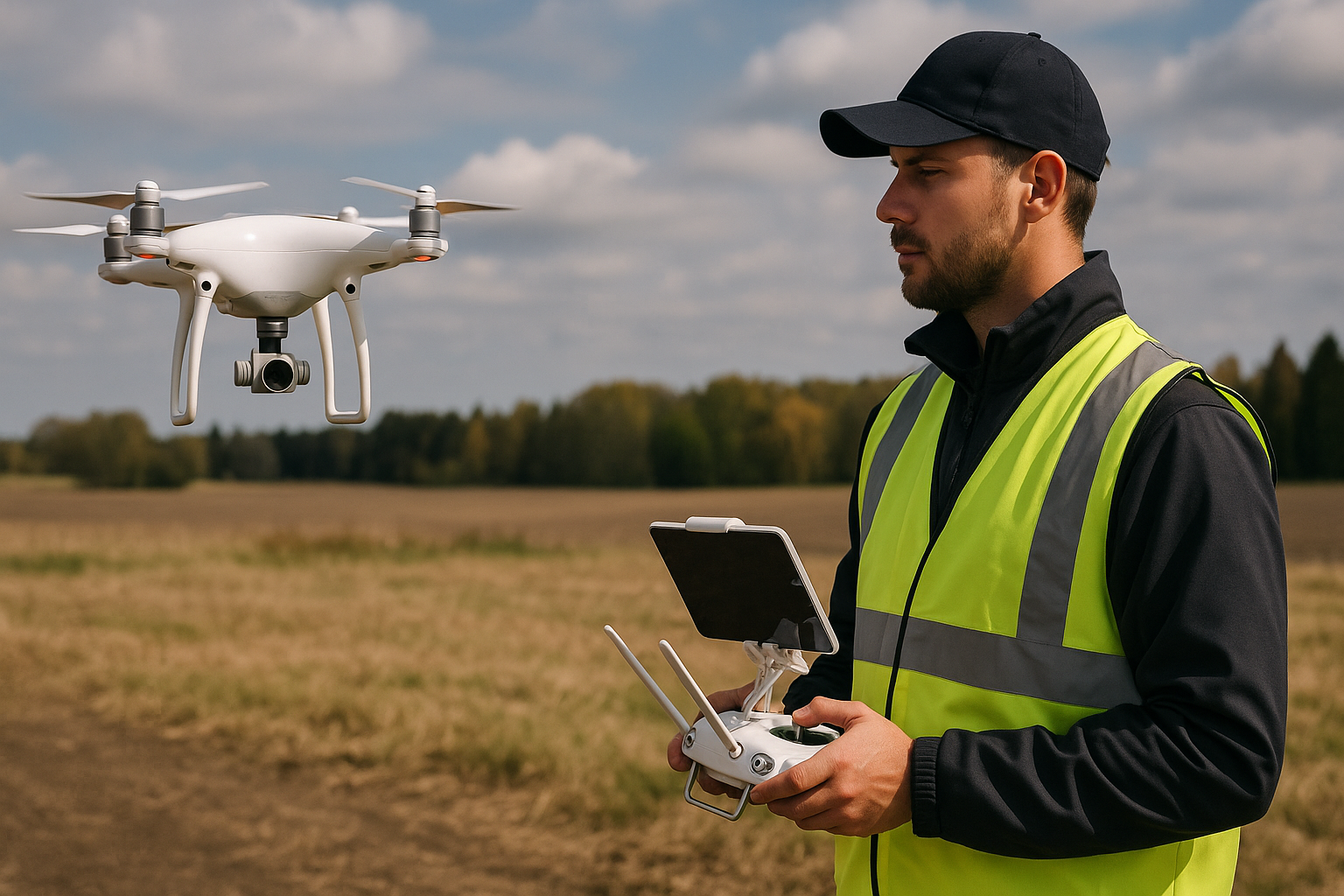
In India, drone operations are regulated by the Directorate General of Civil Aviation (DGCA). To fly legally and commercially, one must complete drone pilot training from a DGCA-approved RPTO. Among the most respected RPTOs in India is Garuda Aerospace, known not only for drone manufacturing but also for its comprehensive pilot training ecosystem.
Garuda Aerospace’s drone pilot training courses are aligned with DGCA norms and divided into five primary modules to suit different experience levels and drone categories:
The available courses are: -
Course - A: Small Category Drone Pilot Training ( 8 Days )
The Small Class Drone Pilot Training program is a DGCA-approved, 8-day foundational course tailored for beginners who want to start their journey in drone operations. It offers a comprehensive blend of theory and hands-on experience, covering fundamental drone technology, ATC procedures, aerodynamics, risk assessment, safety protocols, weather, and payload handling. The course includes 2 days of online ground theory and 6 days of practical onsite training using drones such as the Kisan Drone and Droni Drone. Participants engage in simulator sessions and real-world flying to build the core skills required for drone operations in agriculture, photography, surveillance, and inspections. The training is conducted under expert supervision at state-of-the-art facilities, ensuring participants receive recognized certification and practical flying expertise.
Course - B: Small and Medium Class Drone Pilot Training ( 13 Days )
The Small and Medium Class Drone Pilot Training course extends over 13 days and is designed for those seeking to operate both small and medium-category drones. It begins with 2 days of online theoretical instruction, followed by 8 days of practical training focused on small drones and 5 days on medium drones. This intensive program covers air law, ATC communication, aerodynamics (rotorcraft, fixed-wing, and hybrid), weather analysis, equipment maintenance, risk assessment, and drone data analysis. Students also receive instruction in payload installation and dynamic ground handling. The hands-on sessions involve instructor-led and solo flights with various drone categories, equipping participants for careers in mapping, agricultural spraying, industrial inspections, and surveillance.
Course - C: Medium Category Drone Training Without Small RPC (8 days)
The Medium Class Drone Training program is a standalone 8-day course that enables individuals to become proficient in medium-class drone operations without needing prior small-class certification. It includes 2 days of online theoretical sessions and 6 days of simulator and field-based flying. The course explores critical topics such as airspace classifications, ATC protocols, equipment maintenance, safety procedures, and payload integration. For participants who already hold a small RPC, there is an alternative format where theory is exempted (upon passing the theory exam), and the practical training is completed over 5 days. Using drones like the Garuda Kisan Drone, the program provides intensive real-world training and equips learners with the necessary skills for agricultural, surveillance, and mapping applications.
Course - D: Medium Class Drone Top-up Training ( 5 Days )
The Medium Class Drone Top-up Training is a focused 5-day course designed for individuals who already hold a small-class drone license and wish to upgrade to medium drone operations. It covers essential aspects such as air law, rotorcraft operations, hybrid and fixed-wing aerodynamics, drone maintenance, payload utilization, weather considerations, and simulator training. With theory exempted for licensed participants who pass the required assessment, this course emphasizes practical flying and prepares trainees to scale up for more demanding projects, including government contracts and industrial applications.
Remote Pilot Instructor (RPI) Training ( 6 Days )
The Remote Pilot Instructor (RPI) Training is a 6-day course aimed at experienced drone operators who want to become certified instructors. It includes 2 days of online theory and 4 days of practical training focused on teaching techniques, safety procedures, flight simulation, and real-world flying. The curriculum covers instructional methodologies, regulatory compliance, risk management, and mentoring skills. Participants gain the ability to conduct pilot assessments, oversee examinations, and deliver structured drone training. Completing this course allows individuals to take on leadership roles within training organizations and contribute to shaping the future of drone education across the country.
Suggested Read: Ignoring the Power of a Drone for Business Could Be the Biggest Mistake You’re Making in 2025
Drone Pilot Training Modules
At Garuda Aerospace, drone pilot training is divided into three main areas:
Theory: Covers aerodynamics, drone components, safety protocols, meteorology, and airspace classification
Simulator Training: Offers safe, realistic flight practice for maneuvering, takeoff, landing, and emergency handling
Field Training: Includes live drone flying with Kisan or Droni drones, mission planning, data collection, and practical assessments
The RPC includes your identity details, license number, type/class of drone certified for, and validity.
How to Get Admission in DGCA-Approved Drone Training Institute Like Garuda Aerospace?
Visit Garuda Aerospace’s Official Website
Choose the Suitable Drone Training Course
Fill Out the Online Application Form
Submit Required Documents (Aadhaar, Education Certificate, Medical Fitness)
Make the Payment
Receive Confirmation and Begin Training
Garuda offers training across multiple cities in India, making it accessible to rural youth, farmers, and professionals alike.
Unlocking Career Opportunities After Drone Pilot Training with Garuda Aerospace
India’s drone industry is booming, and as it expands into sectors like agriculture, defense, real estate, infrastructure, and environmental conservation, the demand for certified drone pilots is soaring. With DGCA-approved training becoming more accessible, many aspiring professionals are looking for the right launchpad to enter this high-potential field.
Garuda Aerospace, one of India’s leading drone companies and a certified Remote Pilot Training Organization, doesn’t just stop at training—it opens doors to real career opportunities.
Here's a detailed look at how Garuda supports your career journey after completing drone pilot training:
1) Tailored Job Placement Support
Garuda Aerospace does provide tailored job placement support, particularly through its DGCA-certified drone pilot training programs. The training not only equips aspiring pilots with the necessary skills to operate drones but also emphasizes real-world applications and safety regulations. Graduates of these programs often receive assistance in finding job opportunities within the growing drone industry.
Garuda works closely with you to:
Match you with industry roles in agriculture, defense surveillance, inspection services, and infrastructure monitoring.
A comprehensive approach helps enhance their employability in a sector that is rapidly expanding due to the increasing adoption of drone technology in agriculture and other industries.
Support for its trainees extends beyond just education; they actively engage with industry partners and stakeholders, which can lead to potential job placements for graduates.
2) Exclusive Drone Pilot Training (DGCA-Approved)
Garuda Aerospace is recognized by DGCA as a RPTO, which means it is fully authorized to provide drone training that meets national aviation standards. The institute offers multiple courses based on your goals:
Small Class Drone Pilot Training (8 Days)
Small + Medium Class Drone Pilot Training (13 Days)
Medium Class Top-Up Training (5 Days)
Remote Pilot Instructor Course (6 Days)
The training curriculum includes:
Classroom sessions on drone laws, safety, and aerodynamics
Simulator sessions to get a feel of flying in different scenarios
Live flying hours with certified instructors for real-world confidence
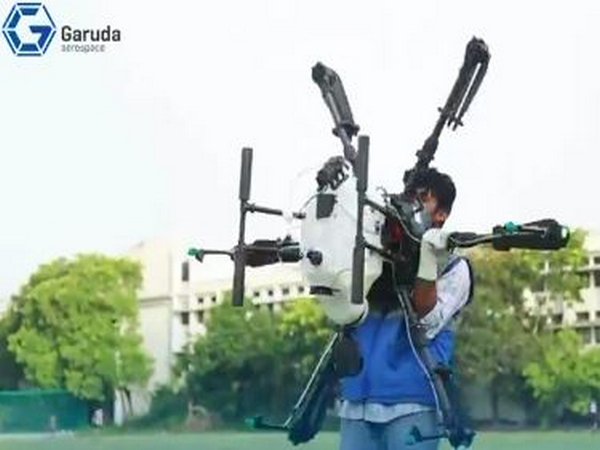
Garuda’s fleet of drones—including the Kisan Drone for agriculture and the Droni Drone for environmental and survey-based use—equip trainees with practical experience across sectors.
3) Expert Mentorship Program
Starting a new career, especially in an emerging field like drone technology, can be overwhelming. That’s why Garuda goes beyond training and offers an Expert Mentorship Program tailored to their individual needs.
This program connects you with:
Industry veterans and drone experts who offer insights on sector-specific flying (agriculture, defense, inspection, etc.)
Business mentors who help you explore self-employment options like drone spraying services or aerial photography
Technical experts who assist with drone maintenance, upgrades, and flight optimization
The mentorship provided by Garuda ensures you're not navigating alone.
Drone Operators and Pilots Responsibilities
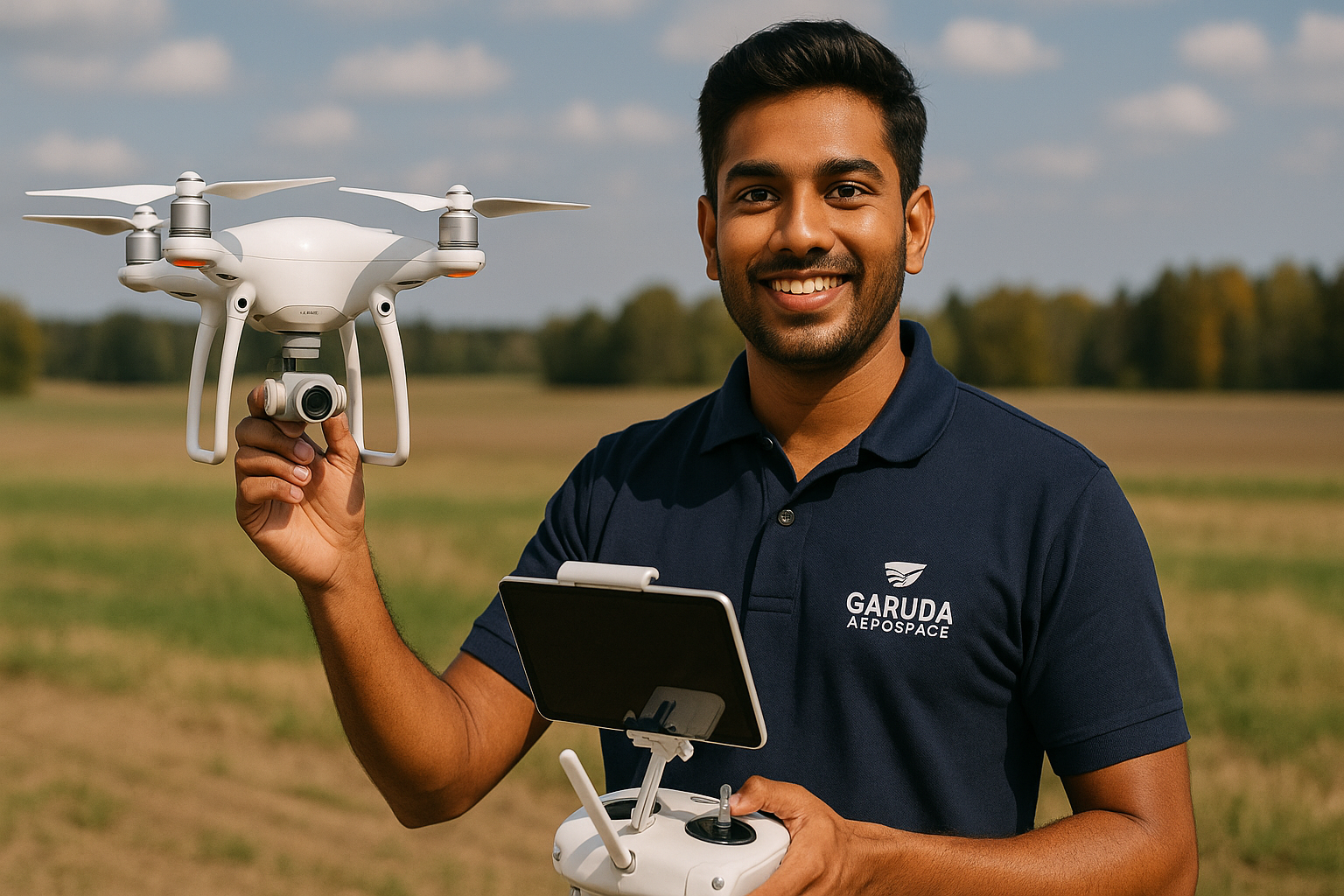
Once you become a certified drone pilot in India, your responsibilities extend far beyond just flying a UAV. Operating a drone in compliance with the Directorate General of Civil Aviation (DGCA) regulations demands a high level of professionalism, accountability, and awareness of aviation safety protocols. Whether you're working in agriculture, infrastructure, surveying, or any other drone-based field, staying responsible and compliant is crucial—not just for legal reasons but also to maintain airspace integrity and public trust.
Related: Drone Mapping and Surveying: The Future of Land Survey
Here are the core responsibilities every certified drone operator and pilot must adhere to:
1. Maintain Drone Flight Logs
One of the primary duties of a certified pilot is to maintain a detailed flight logbook for every drone operation. These logs should include:
Maintaining these logs helps in tracking flight activity, troubleshooting technical issues, and demonstrating regulatory compliance in case of inspections by DGCA or other authorities. It also serves as a valuable record for maintenance, performance review, and training purposes.
2. Operate Only in Permitted Areas
Drone pilots are strictly required to fly only in designated airspace. This means:
Avoiding Red Zones, which are classified as no-fly areas (e.g., near airports, military bases, and government buildings)
Operating with prior approval in Yellow Zones, where permission is required
Freely flying in Green Zones, but still maintaining awareness of surroundings and altitude restrictions
Failing to follow airspace regulations could result in severe legal penalties, seizure of equipment, or cancellation of your pilot license. Drone pilots must regularly check the Digital Sky Platform, which maps out updated airspace classifications.
3. Ensure Pre and Post-Flight Equipment Checks
Before and after every drone flight, certified pilots are responsible for carrying out thorough equipment checks to ensure safe operations. This includes:
Inspecting propellers for cracks or wear
Checking battery charge levels and connection integrity
Verifying GPS calibration and firmware updates
Testing Return-to-Home (RTH) and geo-fencing settings
Ensuring camera and payload systems are functioning correctly
Post-flight checks include evaluating battery condition, reviewing recorded data, and inspecting the drone for any damage that may have occurred during operation. These routines help prevent accidents, improve efficiency, and extend the lifespan of the drone.
4. Report Any Accidents or Incidents to the DGCA
In the event of an accident, equipment failure, or any unauthorized entry into restricted zones, drone pilots are required to immediately report the incident to the DGCA through the proper channels. This transparency is not just a legal obligation but also a part of maintaining the safety and credibility of the drone ecosystem.
The report must include:
A description of what happened
Time and place of the incident
The condition of the drone
Details of any damage or injury caused (if applicable)
Quick reporting helps authorities investigate potential airspace threats, resolve conflicts, and ensure that no further violations occur.
5. Stay Updated with the Latest Drone Rules
Drone laws and airspace management protocols are evolving rapidly in India, especially with the growth of commercial drone applications across sectors. Therefore, it’s essential for drone operators to stay informed about:
New updates to Drone Rules 2021
Changes in airspace classifications
DGCA notifications on training or licensing
Technological advancements or certification upgrades
Organizations like Garuda Aerospace, a DGCA-certified Organization, provide training and regular updates to help drone pilots stay compliant and competitive.
Final Thoughts: Become an Aspiring Drone Pilot with Garuda’s UAV Pilot Licence
India’s drone revolution is booming and opportunities are only going to grow. Don’t get left behind. With a UAV pilot licence in your hand and training from Garuda Aerospace, you can fly higher—legally, and safely.
The UAV pilot licence is more than a legal requirement—it’s your gateway to one of India’s most promising career paths. Whether you’re a student, a farmer, a photographer, or an engineer, drone technology has a place for you. And with Garuda Aerospace, you’re learning from the best.
If you found this blog helpful, share it with someone who wants to turn their passion for drones into a powerful profession.