Why Drones Are the Future of Warehouse Operations
Speed and Efficiency
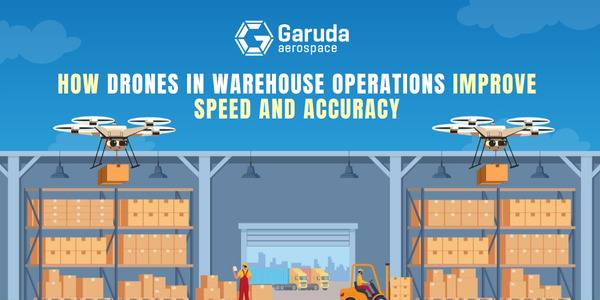
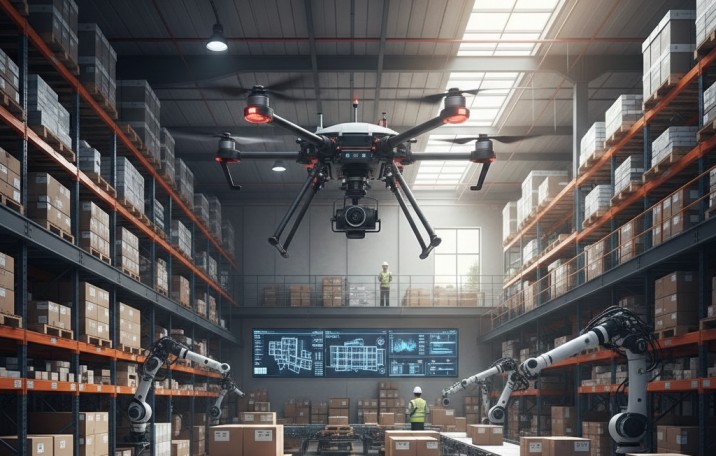
Traditional warehouse management relies on manual labor or ground-based warehouse automation using drones systems. While effective to some extent, they often face limitations in speed and reach. Drones can cover large storage areas in a fraction of the time, providing aerial visibility that human operators simply can’t match.
Key advantages of using drones in warehouses:
Rapid scanning of inventory
Real-time data collection and transmission
Reduction in human error
Ability to monitor hard-to-reach zones
Accuracy and Data Intelligence
Garuda Aerospace drones excel in high-precision mapping and data capture. Equipped with advanced cameras and sensors, they can scan barcodes, record stock levels, and identify discrepancies far quicker than manual checks.
How drones improve accuracy in warehouses:
AI-powered image recognition for stock identification
High-resolution cameras detect damaged goods
GPS-enabled mapping for precise stock location
Instant report generation for faster decision-making
Garuda Aerospace’s Kisan and Agri Drone in Warehouse Integration
Kisan Drone — Versatility Beyond the Fields
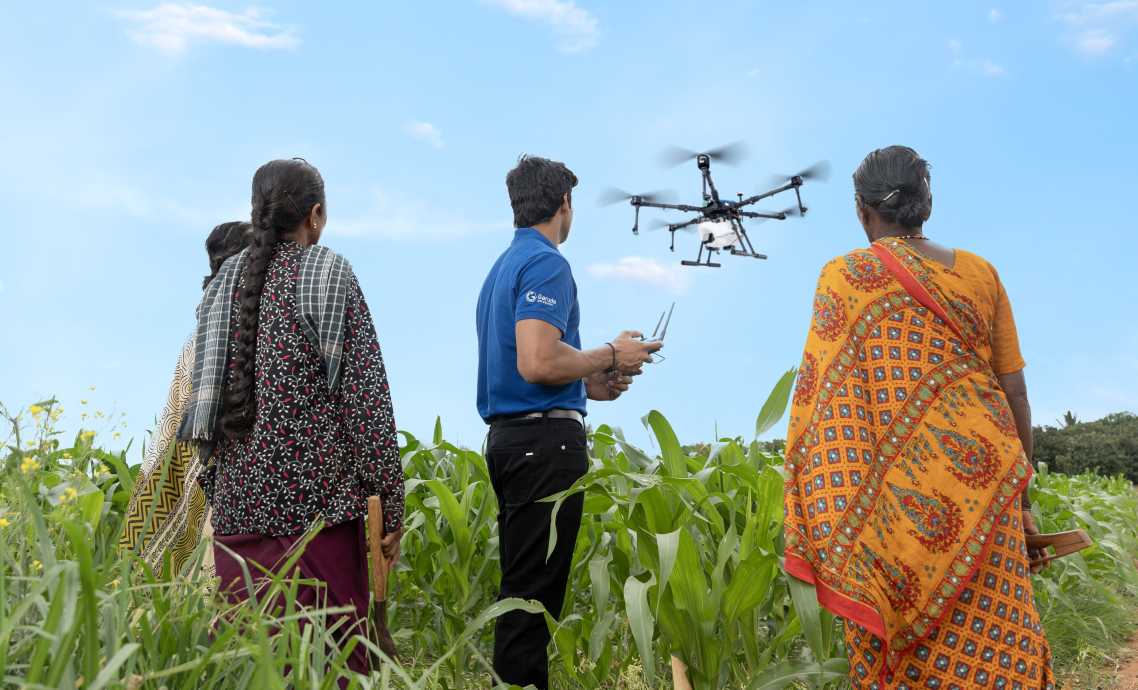
Although designed with farmers in mind for agricultural purposes like sowing seeds and spraying pesticides, the Kisan Drone’s aerial capabilities make it an asset in warehouses handling agricultural produce.
Kisan Drone features relevant to warehouses:
Payload capacity suitable for carrying lightweight inventory tools or samples across large storage spaces
Extended flight time for long warehouse operations without frequent charging
Precision navigation for accurate path mapping indoors
Camera systems capable of high-definition scanning
Agri Drone — Intelligent Visual Capabilities
Garuda’s Agri Drone focuses on crop monitoring, but these advanced imaging capabilities are equally valuable indoors.
Its cutting-edge camera range allows inventory inspections, packaging checks, and damage detection in real time.
Agri Drone highlights:
Zoom-enabled optics for close-up inspection without approaching goods physically
Thermal imaging sensors to detect temperature variations—a critical factor for warehouses storing perishable items
Advanced stabilization technology for clear images even in confined warehouse spaces
Related Reads: Ignoring the Power of a Drone for Business Could Be the Biggest Mistake You’re Making in 2025
Real-Life Applications in Warehouse Contexts
The adaptability of Garuda’s drones means they fit seamlessly into warehouse workflows. Below are key applications:
Application | Benefit | Drone Capability |
Inventory Scanning | Faster cycle counts | High-resolution camera & AI stock recognition |
Quality Control | Detect damages before dispatch | Optical zoom & thermal imaging |
Analytics | Track stock movement trends | Data logging tools & cloud integration |
Security | Monitor inaccessible areas | Wide camera range & GPS tracking |
Goods Transport (Light Payloads) | Move items easily | Strong payload capacity |
Case Study — An Agri Business Using Garuda Drones in Warehouse Operations
Scenario:
An agricultural logistics company storing seeds and packaged goods integrated Garuda’s Kisan Drone into inventory checks.
Results achieved:
Reduced stock counting time from 8 hours to 1.5 hours
Errors in inventory dropped by over 90%
Increased worker safety by reducing the need to climb racks
With the Agri Drone, they performed quality inspections of packaged goods before shipment. The zoom-enabled cameras identified damaged packaging that could have led to costly returns.
Related Reads: The Top 10 Benefits of Drones in Agriculture
Benefits for Farmers and Agri Companies
For businesses in agriculture, warehouse efficiency isn’t just about storage—it’s about preserving product quality and ensuring timely delivery.
Direct benefits of drones in warehouse operations:
Reducing overhead costs through automation
Improving product traceability with detailed records
Accelerating dispatch times by streamlining checks
Enhancing safety for warehouse workers
Step-by-Step Integration Guide for Garuda Aerospace Drones in Warehouse Operations
Here’s a practical guide for farmers or companies looking to leverage Garuda’s drone technology:
Assess Needs
Identify warehouse areas where drones can optimize processes—inventory, quality control, or security.
Choose the Right Drone
Map Warehouse Zones
Use drones to create aerial maps of shelves, stock placement, and restricted zones.
Set Up Data Integration
Connect drone camera feeds to warehouse management systems for instant updates.
Run Pilot Operations
Test in smaller zones before scaling up.
Scale Across Operations
Deploy multiple drones to handle different tasks simultaneously.
Final Takeaways
The integration of drones in warehouse operations is not just a technological upgrade; it’s a strategic advantage for agricultural businesses.
Garuda Aerospace’s Kisan Drone and Agri Drone offer unmatched precision, speed, and adaptability, ensuring farmers and agri companies stay competitive in fast-paced supply chains.
Key takeaways:
Drones dramatically reduce inventory management time.
High-quality imaging prevents costly shipment errors.
Lightweight transport capability adds versatility.
Integrated analytics give decision-makers actionable insights.
Related Reads: How Drones for Livestock Management Are Changing Modern Farming
Frequently Asked Question
Q. How are drones used in warehouse operations?
Ans. Drones can automate tasks such as inventory scanning, stock counting, and monitoring warehouse conditions. Equipped with cameras and sensors, they can quickly navigate aisles, scan barcodes, and relay data to warehouse management systems for real-time accuracy.
Leveraging the innovative drone solutions for enterprises, like those from Garuda, warehouses can achieve faster inventory audits with reduced manpower and minimal operational downtime.
Q. What benefits do drones provide for warehouse management efficiency?
Ans. Key benefits include:
Speed: Drones can scan large areas in minutes compared to hours for manual checks.
Accuracy: Reduces human error in stock counts and location tracking.
Safety: Minimizes risks from working at height or in hard-to-access zones.
Cost savings: Cuts labor expenses and speeds up logistics turnaround times.
Drawing from Garuda’s experience in precision mapping and monitoring in agriculture, similar advanced navigation and sensor capabilities can be adapted for warehouse layouts to boost operational control.
Q. Do drones integrate with existing Warehouse Management Systems (WMS)?
Ans. Most enterprise-grade drones, including those from Garuda, offer seamless integration with existing ERP and WMS platforms, enabling automated data uploads. This is similar to how Garuda’s agricultural drones feed soil mapping and disease detection data into farm management tools.
Q. Are drones cost-effective for warehouse operators?
Ans. Yes. Although there is an initial investment, the long-term savings from reduced labor, faster turnaround times, and minimized inventory errors quickly offset upfront costs. Garuda’s approach to financial support made simple for enterprise drone adoption ensures businesses can integrate these solutions without heavy budget strains.
Q. Are warehouse drones suitable for all warehouse sizes and layouts?
Ans. Yes — drones can be deployed in both small-scale storage facilities and large, multi-zone warehouses. The drone’s adaptability, much like Garuda’s livestock search and rescue and yield estimation technology, enables navigation even in complex or cluttered environments.
Q. What safety measures are needed when using drones indoors?
Ans.
Establish clear operational zones to avoid interference with workers.
Use collision-avoidance systems and geo-fencing.
Train staff on drone awareness and safety protocols. Garuda’s trusted partner model includes training and collaborative setup to ensure safe and efficient usage.